
By Pew Research Center
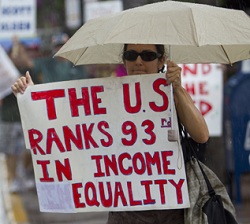 The controversy over Washington, D.C.’s “living wage” ordinance, which may prompt Wal-Mart to pull out of as many as six new stores planned for the city, has drawn new attention to those near the bottom of the nation’s wage ladder. The ordinance would require large, non-union retailers to pay their workers above the District’s $8.25-an-hour minimum wage. But who are minimum-wage earners, exactly?
Perhaps surprisingly, not very many people earn minimum wage, and they make up a smaller share of the workforce than they used to. According to the Bureau of Labor Statistics, last year 1.566 million hourly workers earned the federal minimum of $7.25 an hour; nearly two million more earned less than that because they fell under one of several exemptions (tipped employees, full-time students, certain disabled workers and others), for a total of 3.55 million hourly workers at or below the federal minimum.
That group represents 4.7% of the nation’s 75.3 million hourly-paid workers and 2.8% of all workers. In 1979, when the BLS began regularly studying minimum-wage workers, they represented 13.4% of hourly workers and 7.9% of all wage and salary workers. (Bear in mind that the 3.55 million figure doesn’t include salaried workers. But BLS says relatively few salaried workers are paid at what would translate into below-minimum hourly rates. Also, 19 states besides the District have minimum wages higher than the federal standard; people who’d be minimum-wage workers in those states aren’t included in the 3.55 million total.)

 soulbrotherspeaks.com