Why I changed my mind on weed

English: Sanjay Gupta, American neurosurgeon

Dr. Sanjay Gupta, American neurosurgeon (Photo credit: Wikipedia)

By Dr. Sanjay Gupta

Over the last year, I have been working on a new documentary called “Weed.” The title “Weed” may sound cavalier, but the content is not.

I traveled around the world to interview medical leaders, experts, growers and patients. I spoke candidly to them, asking tough questions. What I found was stunning.

Long before I began this project, I had steadily reviewed the scientific literature on medical marijuana from the United States and thought it was fairly unimpressive. Reading these papers five years ago, it was hard to make a case for medicinal marijuana. I even wrote about this in a TIME magazine article, back in 2009, titled “Why I would Vote No on Pot.”

Well, I am here to apologize.

I apologize because I didn’t look hard enough, until now. I didn’t look far enough. I didn’t review papers from smaller labs in other countries doing some remarkable research, and I was too dismissive of the loud chorus of legitimate patients whose symptoms improved on cannabis.

Instead, I lumped them with the high-visibility malingerers, just looking to get high. I mistakenly believed the Drug Enforcement Agency listed marijuana as a schedule 1 substance because of sound scientific proof. Surely, they must have quality reasoning as to why marijuana is in the category of the most dangerous drugs that have “no accepted medicinal use and a high potential for abuse.”

Read More Dr. Sanjay Gupta: Why I changed my mind on weed – CNN.com.

Posted in News from the Soul Brother | Tagged , , , , , , , , | Leave a comment

Will buying airline tickets change to a ‘real-time’ fare system?

departing LAX

departing LAX (Photo credit: Wikipedia)

By Christopher Elliott

Sue Marcus was looking for a flight from Washington to Tulsa.

Instead, she found trouble.

Every time the American Airlines Web site asked her to select a return flight, it came back with an error message saying that the fare she’d selected was “no longer available.” She phoned the airline to finish the reservation. “A customer service agent told me that she couldn’t use the same Web system that the public sees, though she found a fare that was $50 higher than the flight I’d originally chosen,” says Marcus, a retired government worker from Fairfax.

When Marcus asked why this was, the agent said that bookings are made in “real time,” while the Web site updates aren’t. In other words, Marcus was seeing fares that had already been purchased by someone else. “The representative said that there had been lots and lots of complaints about this issue,” she recalls.

That’s true. Gripes about what some call the airline “bait-and-switch” scam cross my desk regularly. Passengers find an affordable ticket price displayed on an airline Web site or by an online travel agency such as Expedia, Orbitz or Travelocity, but the fare vanishes when they try to buy it. Passengers like Marcus then have no choice but to book a more expensive flight.

Read More Will buying airline tickets change to a ‘real-time’ fare system? – The Washington Post.

Posted in News from the Soul Brother | Tagged , , , , , , , | Leave a comment

Marijuana stops child’s severe seizures

By Saundra Young

marijuana-leafBy most standards Matt and Paige Figi were living the American dream. They met at Colorado State University, where they shared a love of the outdoors. After getting married, the couple bought a house and planned to travel the world.

They did travel, but their plans changed when their first child was born in 2004.

Max was 2 when they decided to have another child. The couple got the surprise of their lives when an ultrasound revealed not one but two babies. Charlotte and Chase were born October 18, 2006.

“They were born at 40 weeks. … Charlotte weighed 7 pounds, 12 ounces,” Paige said. “They were healthy. Everything was normal.”

Seizures and hospital stays begin

The twins were 3 months old when the Figis’ lives changed forever.

Charlotte had just had a bath, and Matt was putting on her diaper.

“She was laying on her back on the floor,” he said, “and her eyes just started flickering.”

The seizure lasted about 30 minutes. Her parents rushed her to the hospital.

“They weren’t calling it epilepsy,” Paige said. “We just thought it was one random seizure. They did a million-dollar work-up — the MRI, EEG, spinal tap — they did the whole work-up and found nothing. And sent us home.”

A week later, Charlotte had another seizure. This one was longer, and it was only the beginning. Over the next few months, Charlotte — affectionately called Charlie — had frequent seizures lasting two to four hours, and she was hospitalized repeatedly.

Doctors were stumped. Her blood tests were normal. Her scans were all normal.

Read More Marijuana stops child’s severe seizures – CNN.com.

Posted in News from the Soul Brother | Tagged , , , , , , | Leave a comment

Michelle Alexander – George E. Kent Lecture Series

Posted in Soul Brother Presents | Tagged , , , , , , | Leave a comment

How Secrecy Has Already Corroded Our Democracy in Concrete Ways

By Conor Friedersdorf

flagThis summer, Rep. James Sensenbrenner, an author and longtime champion of the Patriot Act, emerged as one of the most concerned voices arguing that the law is being used to violate the rights of Americans. A letter the Wisconsin Republican sent to Attorney General Eric Holder singles out Section 215, the law’s “business records” provision. “As the author of the Patriot Act,” he wrote, “I am extremely disturbed by what appears to be an overbroad interpretation.” He was referring to Edward Snowden’s revelation that Team Obama collects data on the phone calls of almost all Americans.

Sensenbrenner began to question whether our constitutional rights are secure. “I do not believe the released FISA order is consistent with the requirements of the Patriot Act,” he wrote. “How could the phone records of so many Americans be relevant to an authorized investigation?” His newfound skepticism came as a pleasant surprise to critics of the surveillance state. Two years ago, when key provisions of the Patriot Act were scheduled to sunset, Sensenbrenner proudly and unapologetically lobbied for the re-authorization of the law he helped write. Congress ought to make provisions including Section 215 permanent, he argued back then. “Section 215 of the Act allows the FISA Court to issue

via How Secrecy Has Already Corroded Our Democracy in Concrete Ways – Conor Friedersdorf – The Atlantic.

Posted in News from the Soul Brother | Tagged , , , , , , , , , | Leave a comment

Cities Might Not Be as Prepared as They Think for a Bioterrorism Attack

M-17 nuclear, biological and chemical warfare ...

M-17 nuclear, biological and chemical warfare mask and hood (Photo credit: Wikipedia)

By John Metcalfe

Imagine that a small group of terrorists deliberately infect themselves with smallpox and then walk around London, spreading it to the populace. How much could the terrible disease proliferate before the world realized something was amiss?

This unsettling question is at the heart of new computer model showing how a bioterrorism attack in one city could quickly become the world’s problem. Scientists started off with the hypothetical release of smallpox in London, New York, Paris and other major cities, then simulated how travelers would carry the virus to a host of other countries. Their conclusion: In the best-case scenario, smallpox could spread to two to four nations before doctors managed to diagnose it. Still ahead would lie the monumental task of quarantining the infected, distributing vaccines and tracing the source of the outbreak.

Previous research into bioterrorism have indicated that Western cities, with their protocols and vaccines, are pretty well prepared to handle a biological attack, says Alessandro Vespig­nani, a computer and health-sciences professor at Boston’s Northeastern University. But in a paper in this month’s Scientific Reports (don’t worry, it was vetted for international-security issues), he and his fellow researchers argue that the assumption of local readiness is missing the big picture. “The problem is that most of those studies don’t consider the global dimensions of the event,” Vespig­nani says. “Before you even realize there is an outbreak, it might already be in other places. That changes the game.”

One major danger: From London, the smallpox might spread to countries that don’t have the health infrastructure of the Western world. In these places it could become potent pandemics that might wash over into still more nations. And that’s not only possible for attacks in cities near the less-developed corners of the world. No matter what metropolis a bioterrorist targets for harm, the dispersion of disease unfolds more or less the same way, at least according to the computer model.

Read More Cities Might Not Be as Prepared as They Think for a Bioterrorism Attack – John Metcalfe – The Atlantic Cities.

Posted in News from the Soul Brother | Tagged , , , , , , , , , | Leave a comment

Louisiana parish claims incarcerated 14-year-old consented to be raped by a corrections officer

By Katie McDonough

jailA Louisiana parish is arguing that it should not be held liable for the rape of a 14-year-old girl in a juvenile detention center because the victim “consented” to be sexually assaulted by a 40-year-old corrections officer at the facility.

The victim, now 20, filed a civil lawsuit against her assailant, former guard Angelo Vickers, as well as Terrebonne Parish.

The age of consent in Louisiana is 17, but court documents allege that “Vickers could not have engaged in sexual relations within the walls of the detention center with [the victim] without cooperation from her. Vickers did not use force, violence or intimidation when engaging in sexual relations.”

In a comment on the case to the Tri-County Times, an anonymous official also remarked that the 14-year-old should share the blame for her assault, explaining: “These girls in the detention center are not Little Miss Muffin,” an anonymous official told the Tri-Parish Times as a comment on the case.”

Attorneys for the young woman — supported by victim rights advocates — argue that consent is not possible in this case.

Read More Louisiana parish claims incarcerated 14-year-old consented to be raped by a corrections officer – Salon.com.

Posted in News from the Soul Brother | Tagged , , , , , , | Leave a comment

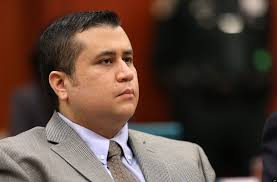
10 Reasons Lawyers Say Florida’s Law Enforcement Threw Away George Zimmerman’s Case

By Steven Rosenfeld

untitledFlorida law enforcement, from the local police to the special prosecutor overseeing the Trayvon Martin case, did not want to see George Zimmerman convicted of murder and deliberately threw away the case, allowing their prosecution to crumble. A growing chorus of attorneys and analysts who know jury trials and courtroom procedure say this is the inescapable conclusion to be drawn from the parade of otherwise incoherent missteps by George Zimmerman’s prosecutors.

“I find it personally difficult to believe it was not thrown,” said Warren Ingber, a New York-based attorney who has practiced law for decades. “I am far from alone in this assessment, and it reveals even harder truth why this case was a miscarriage of justice.”

Ingber detailed his reasons in a letter sent to a NPR’s “Left, Right and Center” program after its liberal analysts would not touch that possibility. But there’s been a growing chorus saying the Zimmerman prosecution was not merely incompetent, but going through the motions and intentionally losing. This includes Florida talk radio host Randi Rhodes, who covered the trial daily, to New Orleans Times-Picayune editorial writer Jarvis DeBerry whose source canvassed 20 local prosecutors, to celebrity lawyers like Alan Dershowitz and other legal analysts, and longtime lawyers like Ingber who was indignant at NPR’s commentators ceding too much ground to right-wingers.

Here are 10 key points the lawyers in these reports cite behind this conclusion.

1. There was enough evidence to convict, despite biased police work. That assessment “is itself a miracle,” Ingber wrote, citing how the Sanford, Florida police handled the killing. “Martin’s body  lay in the morgue as a John Doe for three days while his mother was asking for his whereabouts. His cell phone records indicated he was on the phone as he was being killed. The person he was on with had no idea where he was. Meanwhile his admitted killer was on the loose and allowed to produce exculpatory evidence while crime scene evidence was deteriorating. It appears from videos of Zimmerman ‘strolling’ into custody that he was not that badly hurt. But in Florida the right of self-defense includes, for whites, the freedom to exculpate oneself. And when that wasn’t enough, the police stepped in, as when the lead detective  Chris Serino told Zimmerman the screams for help were his, not Martin’s, over his objection.”

2. The governor’s handpicked prosecutor enters with an agenda. “No account of this trial is complete if it does not start with how the deck was stacked before the trial took place,” Ingber said. “But it continues in the identity of the person that Florida’s [Republican] Gov. Rick Scott selected to prosecute the case: Angela Corey, the prosecutor who  sentenced Marissa Alexander [a black woman] to 20 years for firing a gun into the air in her own garage in defense against a convicted abuser of women. I’ll leave it to Alan Dershowitz, who knows the law of defamation, to  describe her professional lapses that ‘bordered on criminal conduct.’”

Read More 10 Reasons Lawyers Say Florida’s Law Enforcement Threw Away George Zimmerman’s Case | Alternet.

Posted in News from the Soul Brother | Tagged , , , , , , , , , , , , | Leave a comment

I Work for Burger King at $7.40 an Hour — Here’s What It’s Like and Why Fast Food Workers Are on Strike

Current "blue crescent" logo (July 1...

(Photo credit: Wikipedia)

By Claudette Wilson

Claudette Wilson is 20 and works two jobs in the fast food industry, one at Burger King and one at a pizza place. She is on her feet, sometimes for 12 hours a day, and makes $7.40 an hour. She agreed to share her experience for the Guardian’s A Day’s Work series because she wants people to understand why fast food workers have been striking for better wages.

Wilson participated in a protest in Detroit, Michigan last week.

1. What is your typical day like?

Everyday for me is different. I can tell you how a typical Saturday is like: first I wake up around 8am to go to work at Burger King from 10am to 6pm. After I get off of work from Burger King, I go to my second job at Jet’s Pizza from 6pm to midnight. After I get done with working, sometimes I hang with friends, sometimes I just go to sleep.

2. There’s been a lot of talk lately about people wanting work/life balance. Does your job provide that?

My work/life balance is pretty rough at times. There’s not even much time for me, let alone anyone else. In a weird way though, having both jobs does provide balance to me and a change of scene, but I’m not sure about others.

3. What’s the craziest/most unexpected thing that’s ever happened to you while on the job?

The most unexpected thing that happened to me when I was at work is when I witnessed a robbery at the Burger King I work at. The guy tried to get away in a cab. One of the cashiers and my manager at the time ran outside after the cab and chased it down to get the cab driver’s attention. The driver stopped and got out of the car while the cashier and the robber tussled in the backseat for awhile. In the end, the robber got out of the car and ran across the street and got away.

Read More I Work for Burger King at $7.40 an Hour — Here’s What It’s Like and Why Fast Food Workers Are on Strike | Alternet.

Posted in News from the Soul Brother | Tagged , , , , , , , , | Leave a comment

Government Shutdown? Odds Are Uncomfortably High

The US Capital Building

The US Capital Building (Photo credit: bclinesmith)

By Alan Greenblatt

It’s going to be another ugly fall in Washington.

The federal government runs out of money on Oct. 1, unless spending authority is granted to agencies for the new fiscal year. If Congress can’t pass its spending bills by then, most of the government will shut down.

It’s no empty threat. Many who watch the budget process closely think there’s a very good chance that’s exactly what’s going to happen.

“I’m afraid it’s more likely than not,” says Scott Lilly, a former Democratic staff director on the House Appropriations Committee. “How much time has to pass before Congress finds out that people are really angry?”

Action in both the Senate and House prior to the current congressional recess suggests that any sort of a deal is a long way away. And the two chambers will be in session together a total of only nine days before the deadline.

The House and Senate are currently about $90 billion apart in terms of total spending. As if that wasn’t challenging enough, Congress will also have to grapple with the politically charged issue of raising the nation’s debt ceiling sometime in the fall.

House Speaker John Boehner has said he’ll insist on spending cuts equal to any increase in the debt limit. Regardless of whether he holds to that, it’s going to be a challenge to find enough votes in the House GOP majority to vote for any sort of a budget package that the Democratic-controlled Senate will also approve — and that President Obama will sign.

Compounding the difficulty is the fact that a number of congressional Republicans say they want to block any new spending unless Obama’s health law, the Affordable Care Act, is defunded. Many also want cuts triggered by the sequester law shifted from defense to domestic programs — something Democrats are not keen to endorse.

Read More  Government Shutdown? Odds Are Uncomfortably High : NPR.

Posted in News from the Soul Brother | Tagged , , , , , , , , , , | Leave a comment