By Larry Kaplow
 Latin American cartels are fueled by U.S. drug demand so their illegal retail networks often stretch throughout America. And Mexico’s arrest of Miguel Angel Trevino Morales was a reminder that the connections between drug traffickers and the U.S. are not just commercial. They’re also personal.
As NPR’s Carrie Kahn and others noted, Trevino’s formative crime years were during his adolescence in the Dallas area where he joined a local gang. The Dallas Morning News says he still has a mother and sister in Dallas.
The newspaper says that he eventually returned to his native Nuevo Laredo, Mexico, and climbed the murderous criminal ranks.
By the time of his arrest by Mexican Marines early Monday morning, Trevino was alleged to head the Zetas, the most vicious Mexican gang. Known as “Z-40,” “Death” and “Chacal (Jackal),” authorities blame him for beheadings and mass killings in which victims were left dangling from highway overpasses to terrorize residents.
Video of yesterday’s perp walk, showing Trevino in a blue golf shirt, can be found on the website of the Mexican magazine Proceso.
Many Nacros With U.S. Links
Trevino’s not the only notable narco with U.S. origins or strong ties.
One of the most famous and photogenic was U.S.-born Edgar Valdez Villarreal, known as “La Barbie” for his Anglo good looks.
His casual wear and irrepressible smirk while in custody helped launch a Mexican fashion trend for the “Big Pony” Ralph Lauren golf shirts – he wore one after his 2010 arrest.
Read More Latin Drug Bosses And Their Growing American Ties : Parallels : NPR.
 Opening in limited release on October 18, 2013 comes the story of Solomon Northup a free black man from New York who is sold into slavery in pre-Civil War America. 12 Years a Slave stars Chiwetel Ejiofor, Brad Pitt, Benedict Cumberbatch, Michael Fassbender,Quvenzhané Wallis, Alfre Woodard , and Paul Giamatti.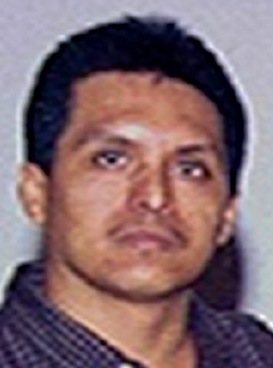


 soulbrotherspeaks.com
Remembering Oscar Grant & Immortalizing Trayvon Martin: Why Do We Need Movies?
Oscar Grant III(1986-2009) (Photo credit: Wikipedia)
By Sophie Jacob
Sitting in the Angelika Theatre in downtown New York City on Friday night, waiting for Fruitvale Station to start, I did not know what I was in for.
The movie is about the death of Oscar Grant on New Year’s Day, 2009 in Oakland, California. Grant, an unarmed 22-year-old African-American man, was with friends and his girlfriend on the way home to his daughter from New Year’s festivities when he was shot by a police officer. Having closely followed the Trayvon Martin trial, I felt prepared for the movie. I thought I knew enough about one law-enforcement-on-young-black-male crime to appreciate another.
I was wrong.
The film, by 27-year-old Ryan Coogler, begins with the shaky footage of the actual shooting. Unlike Trayvon Martin’s killing, Grant’s had a subway-station full of witnesses. Camera phone videos surfaced of the murder. The grainy video opened the film. After leaving me shocked and horrified, Oscar Grant, played by Michael B. Jordan, and his girlfriend, Sophina, appear on screen.
As I was taken on a tour of the last day in the life of Grant, I became so emotionally invested in all the characters. I felt such a connection to them that when the shooting occurred later in the movie, I was praying along with his family on screen for him to survive. At the end, when it was revealed the BART officer served just 11 months for his heinous crime, it was too much to handle.
Read More Remembering Oscar Grant & Immortalizing Trayvon Martin: Why Do We Need Movies? By Sophie Jacob | Global Grind.