
Hmmm, I wonder if Iggy is going to encounter the same backlash Selena Gomez met when she performed wearing a Bindi on the MTV Movie Awards?
-
Recent Posts
Top Posts & Pages
Categories
Hmmm, I wonder if Iggy is going to encounter the same backlash Selena Gomez met when she performed wearing a Bindi on the MTV Movie Awards?
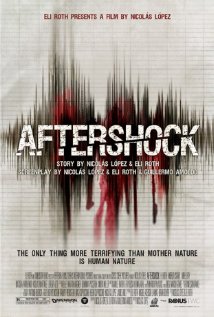 Aftershock opens on May 10, 2013. When an earthquake occurs the partygoers in an underground nightclub (nice) learn that reaching the surface maybe harder than they think. Aftershock stars Eli Roth, Andrea Osvárt, Ariel Levy, & Selena Gomez.
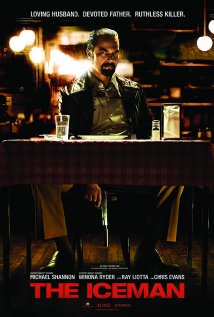 The Iceman is the true story of hitman Richard Kuklinski. The Iceman opened this past Friday in limited release. Keep an eye out for it once it opens in wide release. The Iceman stars Michael Shannon, Winona Ryder, Chris Evans, Ray Liotta, and David Schwimmer.
By Liz Raftery
Iron Man 3 opened with a whopping $175.3 million at the box office this weekend, making it the second-highest opening of all time (behind 2012’s The Avengers) and setting a high standard for the rest of this year’s summer movie lineup, Box Office Mojo reports. The superhero flick, which was the only new movie to open this weekend, earned more than five times the rest of the Top 10 films combined.
Pain and Gain slipped one spot to No. 2, but its gross of $7.6 million was more than a 60 percent drop from its opening week. Holding steady at No. 3 was the Jackie Robinsion biopic 42, which took in $6.2 million. Tom Cruise’s Oblivion fell to No. 4 with $5.8 million, while The Croods stayed in fifth place with $4.2 million.
At No. 6 was The Big Wedding, which took in $3.9 million.
After nearly doubling the number of theaters in which it was shown this week, the Matthew McConaughey/Reese Witherspoon vehicle Mud jumped from No. 11 to No. 7 with a $2.1 million haul. Oz the Great and Powerful also rose, moving back into the Top 10 in eighth place with $1.8 million.
Rounding out the Top 10 were Scary Movie 5 ($1.4 million) and The Place Beyond the Pines ($1.3 million).
Read More Box Office: Iron Man 3 Has Second-Highest Opening Ever – Today’s News: Our Take | TVGuide.com.

“To Kill a Mockingbird,” filed a lawsuit against her literary agent Friday claiming he took advantage of her age and ill-health to steal her royalties.
By Robert Gearty and Ginger Adams Otis
She needs a lawyer like Atticus Finch.
Acclaimed writer Harper Lee, the 87-year-old author of “To Kill a Mockingbird,” filed a lawsuit against her literary agent Friday claiming he took advantage of her age and ill-health to steal her royalties.
Lee, who won a Pulitzer Prize for the 1960 novel dealing with race, morality and the law in the American South, sued Samuel Pinkus and others in New York federal court to ensure her ownership of the copyright to her book and get back allegedly lost commissions.
The author was in an assisted-living facility in Monroeville, Ala., in 2007 after suffering a stroke when Pinkus had her sign a document giving his company her copyright, her lawsuit says.
Lee, who has failing eyesight and hearing, didn’t know what she was signing, her lawyer said.
The copyright was re-assigned to Lee last year after legal action, and Pinkus was discharged as Lee’s agent.
Read More Where’s Atticus Finch when you need him? Author of ‘To Kill a Mockingbird’ in legal battle with agent – NY Daily News.

Despite progress and innovation in key sectors of the United States’ economy, too many loopholes remain to adequately protect human rights from adverse business practices, a group of United Nations independent experts today warned.
While the US Government has committed to the UN Guiding Principles on Business and Human Rights, and established a number of relevant initiatives, “it is not facing the challenge of putting them into practice,” said Michael Addo, who along with Puvan Selvanathan, completed a 10-day mission to the US as representative members of the UN Working Group on business and human rights.
The Guiding Principles outline how States and businesses should implement the UN “Protect, Respect and Remedy” Framework to better manage business and human rights challenges.
The framework is based on three pillars – the State duty to protect against human rights abuses by third parties, including business, through appropriate policies, regulation, and adjudication; the corporate responsibility to respect human rights, which means avoiding infringing on the rights of others and to address adverse impacts that occur; and greater access by victims to effective remedy, both judicial and non-judicial.
From the low wage industries in the services sector, the UN experts met with Government officials, business leaders, civil society and UN organizations in Washington DC, as well as in Florida, California, West Virginia, New York and Arizona.
“The UN experts heard allegations of significant and widespread labour practices that, if correct, would be both illegal under US laws, as well as fall below international standards,” the Office of the UN High Commissioner for Human Rights (OHCHR) said in a news release.
Memo to everyone lambasting Obama for not getting along with Congress: The president is not all powerful. And he needs help from his supporters.

By Jon Favreau
He added the words in one of the later drafts. The announcement speech had been missing something, a direct response to the creeping cynicism of the previous decade. Why would this time be any different? What was so special about this political novice, that he thought he could solve all of these intractable problems on his own?
“That is why this campaign can’t only be about me. It must be about us—it must be about what we can do together. This campaign must be the occasion, the vehicle, of your hopes, and your dreams. It will take your time, your energy, and your advice—to push us forward when we’re doing right, and to let us know when we’re not. This campaign has to be about reclaiming the meaning of citizenship, restoring our sense of common purpose, and realizing that few obstacles can withstand the power of millions of voices calling for change.”
Much has been written over the last few weeks about the limits of presidential power. Some smart observers have pointed out that these limits are not new; that historically they have had less to do with the personalities of our leaders than the structure of our democracy. The founders, reluctant to entrust any executive with the kind of authority that was so abused by the king they revolted against, created a separation of powers between co-equal branches of government.
But how boring is that? The more exciting story to tell is how Lyndon Johnson charmed and strong-armed his way to massive legislative victories. Much less interesting is the fact that most of those victories occurred while his party held record majorities in Congress. By the end of his second term, following the loss of 47 House seats and three Senate seats, one aide joked that Johnson couldn’t even get a Mother’s Day resolution passed.
Read More Leading From Below – The Daily Beast.

Why is the problem of violence against children so much more acute in the US than anywhere else in the industrialised world, asks Michael Petit, President of Every Child Matters.
Over the past 10 years, more than 20,000 American children are believed to have been killed in their own homes by family members. That is nearly four times the number of US soldiers killed in Iraq and Afghanistan.
The child maltreatment death rate in the US is triple Canada’s and 11 times that of Italy. Millions of children are reported as abused and neglected every year. Why is that?
Downward spiral
Part of the answer is that teen pregnancy, high-school dropout, violent crime, imprisonment, and poverty – factors associated with abuse and neglect – are generally much higher in the US.
Further, other rich nations have social policies that provide child care, universal health insurance, pre-school, parental leave and visiting nurses to virtually all in need.
In the US, when children are born into young families not prepared to receive them, local social safety nets may be frayed, or non-existent. As a result, they are unable to compensate for the household stress the child must endure.
In the most severe situations, there is a predictable downward spiral and a child dies. Some 75% of these children are under four, while nearly half are under one.
Read More BBC News – Michael Petit: Why child abuse is so acute in the US.
By Seth Freed Wessler
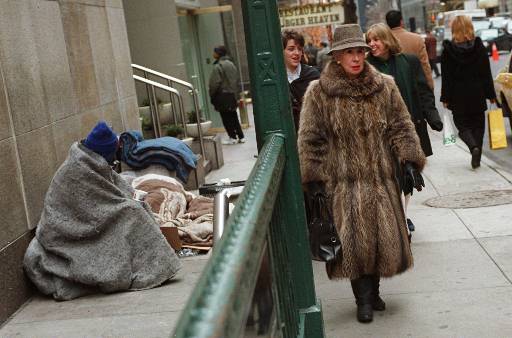 The racial wealth gap never ceases to amaze. Black and Latino families hold pennies of accumulated assets compared to every dollar of the average white family’s investments, retirement savings and home equity. Wealth matters a lot. It’s what families use to buttress against hard times—say a period of joblessness—and it’s what parents pass onto their kids to pay for college and avoid taking out big loans. This means that families without wealth actually pass on a future of debt.
So it’s particularly enraging to observe, once again, that the racial wealth gap is the product of very clear and deliberate public policy. Ta-Nehisi Coates has a post at the Atlantic on a foul 1950’s housing market practice that sprang up because the federal government refused to insure loans for black families. In the space left by this legal exclusion, housing speculators bought cheap properties, jacked up the prices and sold the homes to black families. If the families missed a single payment, the broker could terminate the contract, take all the money the family already invested and kick them out of the home. Coates explains:
Buying on contract meant that you made a down-payment to a speculator. The speculator kept the deed and only turned it over to you after you’d paid the full value of the house — a value determined by the speculator. In the meantime, you were responsible for monthly payments, keeping the house up, and taking care of any problems springing from inspection. If you missed one payment, the speculator could move to evict you and keep all the payments you’d made. Building up equity was impossible, unless — through some Herculean effort — you managed to pay off the entire contract. Very few people did this. The system was set up to keep them from doing it, and allow speculators to get rich through a cycle of evicting and flipping.
Coates posted a chart mocked up by 1960s advocates to show the kinds of markups we’re taking about. The first column reads, “Documented Price Paid By Speculator.” The second: “Documented Price Change To Negro Buyer.” In one case, a home listed on the chart is sold to a black family at nearly three times the purchase price, not including interest.
“In that chart you can literally see black wealth leaving one neighborhood and migrating to another,” Coates writes. “It was not just legal. It was the whole point.”
It’s a prime example, Coates writes, of why “the wealth gap is not a mistake. It is the logical outcome of policy.” And it’s upon this policy history that new forms of predation emerged. The subprime loans of the last decade were targeted to black families who’d been denied affordable and regulated lending services. These losses are part of the reason the wealth gap is now growing. And as I wrote earlier this week, the very same communities appear to be the targets of new schemes, this time in the form of totally unregulated “pension advances” that saddle elderly folks with mammoth interest rates. Some of these borrowers are pushed to advance companies because an earlier foreclosure tanked their credit score and all hope of getting a bank loan.
Read More How Public Policy Built The Racial Wealth Divide – COLORLINES.
By Robert A. Eckert
 When I arrived at Mattel, the company was losing almost a million dollars a day, the bonus pool was empty, and equity awards were underwater. I believed that those challenges were surmountable. On my first day, at a “town hall” gathering in the cafeteria, I said, “I know how this works. We will turn things around, and because I’m the new, outsider CEO, I’ll get a lot of the credit. But I know who’s really going to deserve the thanks—all of you. I appreciate what you’re about to accomplish.”
I had just arrived from Kraft Foods, where I spent the first 23 years of my career. By the time I was chosen to lead the world’s largest toy company, I had experienced every layer of organizational life, starting as an entry-level grunt. And although I worked hard, I also had a lot of help. My parents and teachers influenced me in powerful and positive ways. My 15 different bosses at Kraft all supported, guided, and taught me. Well, all but one—who, by the way, lasted only a year at the company. I found myself saying thank you a lot. Yet I’m also a learner by nature, as I expect most readers of this column are. So I learned to say thank you even more, because the effect was obvious.
Most people come to work every day aiming to do a good job even if my one bad boss didn’t believe that. And most people—and, as a result, most organizations—actually do pretty well. What should they get in return? Cosmetics entrepreneur Mary Kay Ash put it this way: “There are two things people want more than sex and money: recognition and praise.”
Now, I’m not Pollyannaish. My colleagues can vouch for my toughness. But what’s wrong with recognizing a job well done? Why not say thank you more often—and mean it?
At Mattel, we do that with our Rave Reviews program, which allows employees to recognize and thank one another with a simple e-certificate for a free soft drink or coffee. We also give out a Chairman’s Award to exceptional senior managers at our most public gatherings. I believe that habits like those are key to Mattel’s having been named, for six years running, one of Fortune’s Best Companies to Work For. I’m also a fan of encouraging gratitude from outside a company’s borders. As a frequent flier on American Airlines, for example, I receive Applause awards that I can hand out to its employees who deliver superior service.
Wherever I show my thanks, these tips work well for me:
I recently retired from Mattel—and, by the way, my colleagues executed that transition brilliantly. When HBR invited me to pen a column reflecting on my career, this was my thought: What a perfect opportunity to publicly thank everyone who made my work so much fun! If I’ve practiced what I preach, you know who you are.
Read More The Two Most Important Words – Harvard Business Review.

