
-
Recent Posts
Top Posts & Pages
Categories
A new wedding classic!
By Associated Press
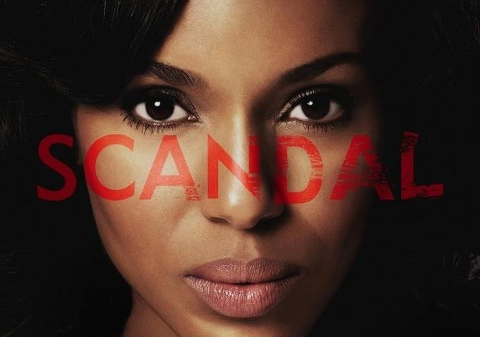 ABC says it will air four fewer episodes of “Scandal” than planned this season.
The network on Friday didn’t say why it will broadcast 18 instead of 22 episodes. But the decision follows word that “Scandal” star Kerry Washington and her new husband, football player Nnamdi Asomugha (NAHM\’-dee AH\’-suhm-wah), are expecting a baby.
The shortened schedule will wrap production early for its pregnant star.
After next Thursday’s episode airs, “Scandal” will take a break and then return in late February with the final episodes of season three.
The drama series about Washington, D.C., intrigue is a ratings hit for ABC and earned an Emmy nomination for its lead actress.
Read More ABC’s ‘Scandal’ Reduced To 18 Episodes This Season.
By C. Daniel Baker
 When starting a business or growing a business from a sole proprietorship, the limited liability company LLC and the S corporation are the go-to entities for small business owners. Both entities provide liability protection which prevents business creditors and those with a judgment against you from accessing your personal assets and act as a pass through, which means that all income from LLCs and S-corps are treated as income of the individual owners. However, there are various differences between the LLC and S-corp.
Instead of randomly choosing one or the other, here are some of the differences that may affect which one you choose for your business:
1. Corporate Formalities: LLCs generally do not have to maintain corporate requirements, even though it’s good practice to maintain separate company records. In some states, LLC owners are required to file a simple biennial statement with the Secretary of State, but that’s about it. S-corps, on the other hand, are required to maintain corporate formalities in order to keep their liability protection. S-corps must keep meeting minutes, a board of directors, officers, separate business accounts and appropriate records for all of their business transactions.
2. Allocating Income: This issue only comes up when there are several owners of the business or when additional owners will be added in the future. LLC owners may allocate the business income to its members disproportionately. That means that two owners may split the income 60-40 instead of 50-50. This may be important in situations where each owner contributes to the business differently — for example, where one owner is putting up startup capital and the other is putting in sweat equity. S-corps do not have this flexibility. Owners of an S-corp (also known as shareholders) are required to split the income equally among all of the owners.
Read More Deciding Between An LLC or S Corporation: 6 Key Differences.
By Desmond Tutu
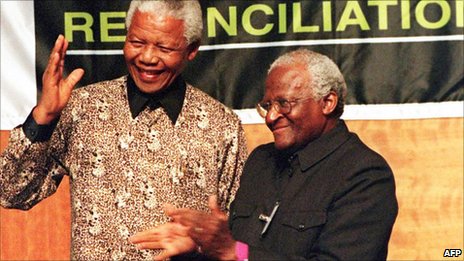
(photo credit: BBC)
Nelson Mandela is mourned by South Africans, Africans and the international community today as the leader of our generation who stood head and shoulders above his contemporaries — a colossus of unimpeachable moral character and integrity, the world’s most admired and revered public figure.
Not since Kenyatta, Nkrumah, Nyerere and Senghor has Africa seen his like. Looking for comparisons beyond Africa, he will go down in history as South Africa\’s George Washington, a person who within a single five-year presidency became the principal icon of both liberation and reconciliation, loved by those of all political persuasions as the founder of modern, democratic South Africa.
He was of course not always regarded as such. When he was born in 1918 in the rural village of Mvezo, he was named Rolihlahla, or “troublemaker.” (Nelson was the name given to him by a teacher when he started school.) After running away to Johannesburg to escape an arranged marriage, he lived up to his name. Introduced to politics by his mentor, Walter Sisulu, he joined a group of young militants who challenged the cautious elders of the African National Congress, founded by black leaders in 1912 to oppose the racist policies of the newly-formed union of white-ruled British colonies and Afrikaner republics.
After the Afrikaner Nationalists came to power in 1948, intent on entrenching and expanding the dispossession of blacks, confrontation became inevitable. As the new government relentlessly implemented one racist, repressive law after another, the ANC intensified its resistance until its banning in 1960, when it decided that, having exhausted all peaceful means of achieving democracy, it had no option but to resort to the use of force.
Madiba, the clan name by which South Africans refer to Nelson Mandela, went underground, then left the country to look for support for the struggle. He received it in many parts of Africa — undergoing military training in Ethiopia — but he failed to get meaningful support in the West.
Upon his return to South Africa, he was captured by the police and first imprisoned for inciting strikes and leaving the country illegally. Two years later he was brought from prison to face charges, along with other leaders, of preparing for guerrilla warfare. At the end of the trial, they were all sentenced to life imprisonment.
In 1964, Madiba was sent to Robben Island prison off the coast of Cape Town as a militant guerilla leader, the commander-in-chief of the military wing of the ANC, Umkhonto weSizwe, committed to overthrowing apartheid by force. When he emerged from prison in 1990, his eyes damaged by the blindingly-bright limestone quarries in which prisoners had been forced to crush rock, and having contracted tuberculosis as a result of prison conditions, he might have been expected to come out hell-bent on revenge and retribution. White South Africans certainly feared so. On the other side of the political spectrum, some of his supporters feared that after campaigners had lionized his role in the struggle, he might turn out to have feet of clay and be unable to live up to his reputation.
Read More allAfrica.com: South Africa: Desmond Tutu Pays Tribute to Nelson Mandela (Page 1 of 3).

(Photo credit: Debris2008)
By Aviva Shen and Judd Legum
In the desire to celebrate Nelson Mandela’s life — an iconic figure who triumphed over South Africa’s brutal apartheid regime — it’s tempting to homogenize his views into something everyone can support. This is not, however, an accurate representation of the man.
Mandela was a political activist and agitator. He did not shy away from controversy and he did not seek — or obtain — universal approval. Before and after his release from prison, he embraced an unabashedly progressive and provocative platform. As one commentator put it shortly after the announcement of the freedom fighter’s death, “Mandela will never, ever be your minstrel. Over the next few days you will try so, so hard to make him something he was not, and you will fail. You will try to smooth him, to sandblast him, to take away his Malcolm X. You will try to hide his anger from view.”
As the world remembers Mandela, here are some of the things he believed that many will gloss over.
1. Mandela blasted the Iraq War and American imperialism. Mandela called Bush “a president who has no foresight, who cannot think properly,” and accused him of “wanting to plunge the world into a holocaust” by going to war in Iraq. “All that (Mr. Bush) wants is Iraqi oil,” he said. Mandela even speculated that then-Secretary-General Kofi Annan was being undermined in the process because he was black. “They never did that when secretary-generals were white,” he said. He saw the Iraq War as a greater problem of American imperialism around the world. “If there is a country that has committed unspeakable atrocities in the world, it is the United States of America. They don’t care,” he said.
Read More Six Things Nelson Mandela Believed That Most People Won’t Talk About | ThinkProgress.

English: Nelson Mandela’s prison cell on Robben Island (Photo credit: Wikipedia)
Less than 10 miles from Nelson Mandela’s opulent home, where thousands are gathering every day to pay tribute, is another house once inhabited by the anti-apartheid icon. This one has only one room, no toilet, no running water, and is in the heart of one of the city’s poorest and most politically volatile enclaves, Alexandra.
There are no mourners singing and dancing outside, no people of all colors waving South African flags. Trash is strewn out front, near a few bouquets of flowers left by neighbors. Drunks stagger around in the afternoon.
But in this forgotten corner, there’s a sense of overwhelming pride. The house was Mandela’s first residence after he left his ancestral village of Qunu in South Africa’s Eastern Cape province in 1941 for Johannesburg, where he eventually launched his career as a lawyer — a journey that will come full circle next weekend when he is buried in Qunu. The house was the anchor of a crucial chapter of Mandela’s life, when he evolved from an heir of a tribal kingdom to revolutionary leader.
By his own account, Mandela spent some of his happiest days in Alexandra. Yet the former township, over the years, has been largely overlooked as areas such as Soweto, Robben Island, Houghton, and Qunu became famous as epicenters of Mandela’s life, bringing waves of tourists and revenue.
Nevertheless, residents of Alexandra have set aside, if briefly, their woes — lack of jobs, education, proper housing and basic services — to quietly remember a man who many here say forged his moral foundation and sense of duty in this sprawling enclave of tin shacks and crowded streets.
“We are not that important. That’s why they are neglecting us,” said Nomalizo Xhoma, 42, whose family has long owned the house. “But for Mandela to start his life in Johannesburg, he started here. For him to one day live in his big house in Johannesburg, he started here.”
Read More Pride in a forgotten place where Mandela once lived – The Washington Post.

T-shirts (Photo credit: Beautification Syndrome)
By Gregory Warner and David Kestenbaum
This story is part of the Planet Money T-shirt project.
Jeff Steinberg had a maroon and white lacrosse jersey that he wore for years. It said “Denver Lacrosse” on the front and had his number, 5, on the back.
Then, one day, he cleaned out his closet and took the shirt to a Goodwill store in Miami. He figured that was the end of it. But some months after that, Steinberg found himself in Sierra Leone for work. He was walking down the street, and he saw a guy selling ice cream and cold drinks, wearing a Denver Lacrosse jersey.
“I thought, ‘Wow, this is pretty crazy,’ ” Steinberg says. Then he looked at the back of the shirt — and saw the number 5. His number. Steinberg tried to talk to the guy about the shirt, but he didn’t speak much English and they couldn’t really communicate.
“I spent a lot of time thinking about that over the following days,” Steinberg says. “It was just beyond me how it could have gotten there.”
It turns out the epic voyage of Steinberg’s jersey — from a used clothes bin in the U.S. to sub-Saharan Africa — is actually really common. Lots of U.S. shirts (including, it seems safe to say, lots of Planet Money T-shirts) will eventually make the trip.
Charities like Goodwill sell or give away some of the used clothes they get. But a lot of the clothes get sold, packed in bales and sent across the ocean in a container ship. The U.S. exports over a billion pounds of used clothing every year — and much of that winds up in used clothing markets in sub-Saharan Africa.
We recently visited the giant Gikombo Market in central Nairobi. There’s a whole section for denim, and another for bras. We, of course, headed for the street of T-shirts, where vendors lay out their wares on horse carts. The shirts have been washed, ironed and carefully folded. It’s more like Gap than Goodwill — if Gap had a very strange product line.
Read More The Afterlife Of American Clothes : Planet Money : NPR.

World of Warcraft (Photo credit: Wikipedia)
By Alex Kane
Players of fantasy games like World of Warcraft are usually worried about their character dying or running out of money. But new documents leaked by whistleblower Edward Snowden reveal that they should have another concern: government spying.
The New York Times’ and Pro Publica’s Mark Mazzetti and Justin Elliott have written a story detailing how the National Security Agency and its British counterpart, Government Communication Headquarters, have infiltrated the online games World of Warcraft and Second Life. Known as massively multiplayer online role-playing games, World of Warcraft and Second Life create virtual worlds for players.
The NSA and GCHQ have collected data and the content of communications of players in the games. They have also created characters for the express purpose of infiltrating the games to spy on and recruit players to become informers. It’s the latest revelation to show that the NSA has a “collect it all” model that now extends to video games.
Read More Revealed: NSA Infiltrating Online Games Like World of Warcraft and Second-Life | Alternet.
 soulbrotherspeaks.com