
By Dr. Yaba Blay
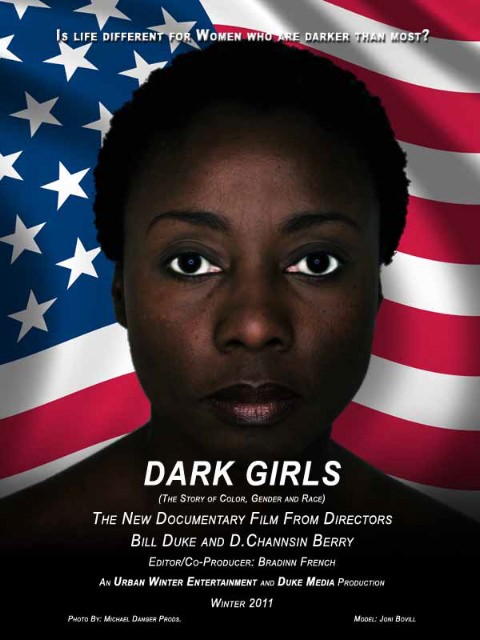 The highly anticipated documentary, Dark Girls, made its debut on OWN Network last night. In the days leading up to the world television premiere, as more and more promo materials were released, people began to reach out to me; and on yesterday, no less than a few dozen folks emailed, messaged, Facebook’ed, and tweeted me – “Dark Girls is on! Are you watching?” I had already seen the film during its national tour last year, but I needed to watch it again, not because it was just that good, but because I wanted to see folks’ response to the film in real-time. My Facebook and Twitter timelines confirmed what I have long known to be true – we have been trained for war.
What I witnessed on social media last night was no different from what I’ve experienced time and time again. Whether in-person or on-line, conversations about skin color often transform into scenes that look like they were taken straight out of School Daze. While many dark-skinned women appreciate the acknowledgement of a pain that feels impossible to heal, others resent what feels like new picking at old sores, while many others reject the repetition of personal reflections that seemingly suggest that all dark-skinned women have issues. Some light-skinned women feel overlooked, their experiences seldom recognized as if their lightness somehow protects them from any pain. But if any of them dare say so, they are quickly and effectively dismissed if not silenced. Brown-skinned sisters who aren’t so light but aren’t that dark are somehow made to reflect on their own skin color as much lighter or much darker than it actually is, just so they can be a part of the conversation. Either that or they watch from the sidelines and remind us every now and again that we continue to push them to the sidelines. And where are the men? Either shaking their heads or being blamed for having us caught out there like so. And like clockwork, there are always more than a handful of brothers willing to offer their unsolicited opinions about their “preference.” In the end, we all head back to our corners exasperated and exhausted.
As I watched Dark Girls and the social media warfare that ensued, I couldn’t help but to question the film’s purpose. I mean, I know what Bill Duke and D. Channsin Berry have said – that they wanted to facilitate dialogue and help to move us towards healing. I get that, I support that, and I have the very same intentions for my own work. I wholeheartedly agree that a potential for our healing lies in open and honest conversation. However, we have to be purposeful about that conversation. Part of the reason why we aren’t able to have different conversations about skin color is because we aren’t talking about skin color any differently than we have been since forever. We can’t seem to talk about our color without our complex.
Read More Color Me Beautiful: A Dark Girl Reflects on “Dark Girls” | Clutch Magazine.



Dark Girls: OWN Documentary Spotlights Skin Color
Tika Sumpter (Photo credit: Sachyn)
By Tika Sumpter
Tika Sumpter doesn’t consider herself a rarity in Hollywood, even if many of her fans do. Sumpter has spent the last 10 years building an impressive résumé that includes roles on popular television shows such as Gossip Girl, The Game, and The Haves and the Have Nots, which airs on Tuesdays at 9 p.m. This winter she’ll also star in Tyler Perry’s A Madea Christmas.
But while it’s undoubtedly Sumpter’s acting chops that keep her regularly employed, some would argue that her mile-high cheekbones, alluring smile, and striking ebony complexion also have something to do with it. In an industry that often fails to celebrate or recognize women who don’t fit the traditional ideal of beauty, Sumpter has managed to rise above the stereotypes and preconceived notions of just who is considered attractive and why. Sumpter shared with The Daily Beast her thoughts on the new documentary Dark Girls, set to air this Sunday at 10 p.m. on OWN, and her hopes for a new generation of young brown women struggling just to feel “good enough.”
One of my favorite childhood memories is of listening to my mother describe the look on my father’s face the day I was born. Whenever my mother shares this story, she somehow manages to re-create it with images so vivid, I can simply close my eyes and feel as if I were still there cuddled in her arms.
It’s important to understand that I was born into a family with seven children, each of us equipped with varying personalities, dispositions, and, yes, skin tones as well. My mom has the most beautiful café au lait complexion, which she shares with my two older sisters and older brother. My three younger siblings have skin tones that range from caramel to a golden bronze.
And then there’s me.
My mother says that when my father, a striking man with kind eyes, broad shoulders, and deep ebony-brown skin, first saw me in the hospital that day, his eyes lit up brightly as he promptly proclaimed, “She has my color. She looks like me!”
Read More Dark Girls: OWN Documentary Spotlights Skin Color – The Daily Beast.