
The $653,000 Solution

By The SoulBrother

american-moneyWhat would do $653,061? Be debt-free? Buy a house? Buy Momma and Daddy a house? No. They are getting their own $653,061 check. Set up a college fund for your children? Take a moment to think of all the possibilities and opportunities One and a half million dollars could do for you and your family.

Time!

What did you come up with? Before you walk to the corner store or jump in your car to play the “numbers”, buy a scratch off, or enter the Powerball drawing think about this. The United States government owes you using today’s dollars, $653,061. Let’s use the government’s logic and round up just like the I.R.S says when you are filing taxes, so that would be $653,061.

Before you get all worked up, let’s go back in time for a second-back in time to January 12, 1865. Major General William Tecumseh Sherman and Abraham Lincoln’s Secretary of War Edwin McMasters Stanton met with approximately 20 black community leaders in Savannah, GA after General Sherman’s infamous march to the sea. Sherman and Stanton communicated to President Abraham Lincoln the outcome of the meeting and four days later, on January 16, 1865 Special Field Order No. 15 was issued.

Special Field Order No. 15 confiscated from the Confederacy the coastline lands from Charleston, SC to the St. John’s River in Florida plus Georgia’s Sea Islands and mainland thirty miles from the coast. Roughly 400,000 acres of land was to be bestowed upon newly freed slave families in parcels no larger than 40 acres. This was not an altruistic or philanthropic gesture; the larger political goal was to destroy the South’s slaveholder’s power. As our newly freed ancestors flooded into the area (approximately 40,000 out of 4 million enslaved in the U.S. at that time) to take advantage of the order, Sherman later ordered that the Union army would lend our ancestors mules. Our ancestors were permitted and protected by the Union army to set up our own towns and municipalities under supervision of the Freedmen’s Bureau.

After President Lincoln’s assassination later that year, Andrew Johnson his successor was sympathetic to the South and issued pardons to the Confederates. In doing so, he also returned the confiscated property to those who committed treason by rebelling against the United States. The United States therefore paid reparations to the slaveholders and not the enslaved!

Rev. Dr. Martin Luther King Jr. figured that if the government was to honor the promise of 40 acres and a mule (using payment of $20 weekly from the inception of US slavery roughly from the late 1700’s for approximately 4 million slaves at the time of the issuance of Special Field Order No.15) would total $800 billion dollars. Figuring in today’s dollars using the same method of calculation the value would increase to $6.4 trillion dollars. That’s 6-4 followed by twelve zero’s!

The case of reparations has been made time and time again. The former West Germany and Israel agreed in 1952 for West Germany to compensate Israel for the persecution, theft of property, slave labor, and murder of Jews by the Nazis during World War II. West Germany paid 3 billion Marks to Israel over the course of the next 14 years. In today’s US dollars that is $1,746,929,739! Israel used the funds to build their infrastructure amongst other items.

If every African-American family received a one-time disbursement (according to the U.S. Census Bureau there’s 9.8 million Black families in America) that would be a $653,061 check using Special Order No. 15 guidelines of “Forty Acres and a Mule.”

The impact to Black America would be enormous. Imagine a lump sum disbursement or even a disbursement over a five or ten year period… Overnight the pronounced income inequality African-Americans face would be significantly diminished. The economy of the United States would receive a “stimulus” from consumer purchasing albeit this could be temporary. From a larger perspective African-Americans would have the opportunity to create sustained generational wealth. There would be some who will become the Black Nelson Rockefeller’s of their generation. They would build businesses; hire people and create the “American dream” for others. Entrepreneurship has always been in the soul of African-Americans. Instead of relying on a paycheck we can create our own paychecks en masse across America for ourselves. The “hood” erstwhile “ghettos” of Black America would see investment not from persons who don’t know where the “hood” is or is only concerned about their own wallets but from the people who matter the residents who live there. Those “hoods” would become “Wall Streets” across America. They would generate commerce and trade that just don’t help the neighborhood but the state and the nation-another industrial revolution across America reinforcing and feeding sustained growth and global leadership of America. Our neighborhoods would be able to re-invest our capital and provide better educational opportunities, lower our unemployment rate, eliminate food deserts (supermarket chains love thriving communities), lower crime and instances of violence amongst each other. Our neighborhoods would replace despair with hope.

Of course, such a payout would not be without any strings attached. Maybe, forfeiting future social security payments? Would you care about that? With $653,061 anyone should be able to build a nest egg. Possibly imposing a condition of having at least 1 parent who can trace their lineage back to slavery? That would eliminate some-not many. Maybe, instead of a lump sum payout, a payout made over time to reduce stress on the treasury. Who would decline $65,306? With that amount over a ten year disbursement period would still be good. It would allow persons with no training to get some and still live. If you are working for a living wouldn’t an extra $65,000 tax free per year for 10 years be nice?

Alas, money equals power and that maybe the largest impediment to receiving such a payment now and historically is just that-the relinquishment of power by the currently perceived majority. Reparations to African Americans for our ancestors forced bondage scare the soon to be minority current majority and their power structure because money is power and by relinquishing the money they will be surrendering their power to the very people they fear.

Posted in Thoughts of the Soul Brother | Tagged , , , , , , | Leave a comment

61 Years After Brown v. Board Of Education, Many Schools Remain Separate And Unequal

By Rebecca Klein

Decades after the U.S. Supreme Court’s Brown v. Board of Education ruling declared segregated schooling of black students unconstitutional, many American schools with high minority populations continue to receive fewer resources and provide an education that’s inferior to schools with large white populations.

For Sunday’s 61st anniversary of the Brown v. Board of Education ruling, which proclaimed “separate educational facilities are inherently unequal,” The Huffington Post takes a look at the state of education for black students in 2015.

In many states, there continues to be stark disparities in resources provided to black students and white students. In Nevada, for example, high-minority school districts receive significantly less state and local funding per pupil than low-minority districts.

These six graphs show the disparities.

Read More 61 Years After Brown v. Board Of Education, Many Schools Remain Separate And Unequal.

Posted in News from the Soul Brother | Tagged , , , , | Leave a comment

Chicago Just Became the First U.S. City to Pay Reparations to Victims of Police Torture

By Araz Hachadourian

In 2005 Standish Willis, a lawyer from Chicago, was home with a broken ankle. He was working on the case of a man who claimed that, years ago, he had been tortured by police. On the radio in the background, President George Bush argued that the U.S. military’s actions in Abu Ghraib did not constitute torture. That’s when Willis had an idea: “We could make the torture case international, and embarrass the United States.”

On May 6, after decades of lobbying, international intervention, and grassroots organizing, Chicago became the first U.S. city to offer reparations to victims of police violence. From 1972-1991 more than 110 mostly African American men were tortured into confessions by Jon Burge, a police lieutenant, and his subordinates.

Last week’s success comes 21 years after Burge was fired for his misconduct.

“The city had lived so comfortably with the torture for so long that I thought not much could disturb that,” said John Conroy, a former reporter who first covered police torture in Chicago 25 years ago.

Conroy heard about the movement to bring reparations in 2010, but didn’t think it would be successful. “I think it can be safely said that millions of people in this city have known for at least 22 years that the torture occurred,” he said. “But there has never been a palpable atmosphere of outrage.”

Read More Chicago Just Became the First U.S. City to Pay Reparations to Victims of Police Torture by Araz Hachadourian — YES! Magazine.

Posted in News from the Soul Brother | Tagged , , , , , , , | Leave a comment

I’ve served 15 years of my life sentence for a drug crime. Can I go home now?

By Sharanda Jones

photo: clemencyreport.org

photo: clemencyreport.org

Late last month, US attorney general Eric Holder announced that the Obama administration would release new guidelines for clemency petitions, opening up the possibility that thousands of people serving long prison sentences for non-violent drug offenses might be released. The guidelines require that applicants have served at least 10 years on a charge that would be prosecuted differently today – a standard which mostly applies to drug charges – and that they have a good prison record, a limited prior arrest record and no ties to organized crime. The author of this op-ed has served 14 years and nine months of her sentence and hopes that she might qualify for clemency.

When I was asked to write my bio for this story, I wrote, “Sharanda Jones is a loving, caring mother with a open heart and mind.”

When I was asked to write the story itself, I wrote, “I am a first time non-violent offender serving a life sentence for one count of conspiracy.”

There is no reduction, no good behavior, that will ever reduce my sentence and allow me to return to society. I know that, unless President Obama (or one of his successors) commutes my sentence, I will die in prison. A life sentence in the federal system is just a very slow death.

I was sentenced in 1999 for a crack cocaine charge. I write this not to boast or brag about the bad decisions I made in my past. I write this because I think I deserve a second chance.

I grew up in a very small town – Terrell, Texas – with four other siblings. My mom was paralyzed in an automobile accident when I was little, so I was raised by my grandmother. I had to assist my grandmother with all my mother’s medical needs from a very young age. Life was loving but hard, and we had very little money.

After high school, I started hanging out and, blinded by society and worldly idols, I started trafficking in drugs as an easy way to help my mom pay bills and get the extra things I wanted. I never intentionally or knowingly meant to harm anyone – like a lot of people, I was ignorant of the harm drugs can inflict on users, their families and our communities.

Read More Ive served 15 years of my life sentence for a drug crime. Can I go home now? | Sharanda Jones | Comment is free | The Guardian.

Please sign the petition to request clemency for Sharanda Jones: https://www.change.org/p/president-barack-obama-sharanda-jones-does-not-deserve-to-die-in-prison

Posted in News from the Soul Brother | Tagged , , , , , , , , , , | Leave a comment

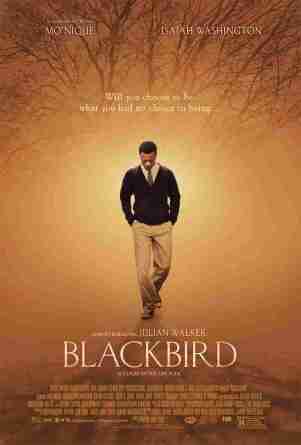
A Look At ‘Blackbird,’ The First Film On The New ‘Black Netflix’

By Neda Ulaby

A tiny independent movie has been picked by one of Hollywood’s biggest moguls to promote his latest venture. Robert L. Johnson created BET and now, the Urban Movie Channel — an online channel that’s being called the black Netflix.

The first original film it has acquired is a gay interracial romance set in the Deep South. In Blackbird, the main character Randy is in high school. Everyone thinks he’s gay, and they’re totally fine with it.

Randy, 18, is fervently religious. Even though his best friend is gay, Randy’s in denial about his own sexuality.

Director Patrik-Ian Polk says Blackbird is a movie he has wanted to make ever since he left Mississippi for college and found himself in the gay and lesbian section of a Boston bookstore.

Read More A Look At ‘Blackbird,’ The First Film On The New ‘Black Netflix’ : Code Switch : NPR.

Posted in Soul Brother's Trailers | Tagged , , , , , , , , | Leave a comment

I secretly lived in my office for 500 days

By Terry K.

I was asleep when I heard the door rattle against the frame. My eyes flashed open and I sprung upright in my under-desk sleep space. Was it all over? Had someone come to work early? I peered over my desk, afraid of what I might see. The morning sun burned through the chicken-scratch graffiti of the office’s front door, spilling across the labyrinth of desks spread out before me. There wasn’t a soul in sight. I breathed a sigh of relief. Probably just paranoia. Or maybe not — a breeze blew the front door against its frame, the pygmy-like rattle of a loose door jamb. It was the same sound I heard moments before and would hear countless times in the future but never quite get used to.

A little paranoia goes a long way when you live in a 10-square-feet workstation. I stood up, stretching my limbs toward the sky like a thawing, cryo-preserved humanoid, neck kinked and back stiff. I bent down to deflate my air mattress. The clock read 6:45 a.m. Under normal circumstances I’d still be asleep, but these circumstances were far from normal.

Earlier that week, I had moved into my office. Secretly. I rented out my Venice Beach apartment for the month, packed a few duffels with my clothes and prized belongings, and started taking up residence behind my desk, carefully using each square inch of out-of-sight real estate to store my stuff. Not everyone aspires to have their co-workers catching them at their desk in their tighty-whities—at 6 in the morning. Believing the absolute best-case-scenario reaction to my being there would be supreme awkwardness, I kept the whole thing to myself. Every morning I’d neatly pack away my personal belongings, turning the lights back on and lowering the air conditioning to its too-chilly-for-me 72 degrees—the way they always left it overnight. I’d leave for a morning workout and shower, simultaneously keeping clean and in shape while ensuring I wasn’t always the first to arrive. Occasionally I’d even make myself late to work, blaming the awful L.A. traffic. Just to fit in.

Read More I secretly lived in my office for 500 days – Salon.com.

Posted in News from the Soul Brother | Tagged , , , , , , , | Leave a comment

On Being Useful: Bearing Witness in a Time of Protest

By Candace Lloh

For the past few days, I have been studying lead poisoning. Like many others out there in the interweb world, my knowledge on a lot of things only stretches as far as my social media feeds, the books I have chosen to read, and what I hear through friends who have experienced or witnessed a thing. So when I learned of the protests and riots that broke out following the unlawful arrest and murder of 25-year-old Baltimore resident Freddie Gray, my memory and thoughts surrounding all of this chaos only went back to my life as a resident of Washington, DC. I lived 45 minutes away from Baltimore. I had spent a little time in the city but all I really knew back then was rooted in brief encounters and hearsay. I didn’t know much else. Nor was there any pressure for me to dig deeper.

So when the news of street fires, broken windows, and all-out riot in a city that I knew only by one degree of separation began to flood my timeline, unlike other instances, I decided to do my research. I researched the life of Freddie Gray. I researched his brutal and deadly arrest. I researched the magnitude of the riots. I researched the protests that began before the riots. I researched Baltimore city. In particular, I researched The Avenue. In this short period of time and with my limited research skills, I came across information on lead poisoning and learned that in 1978 paint containing lead was ruled hazardous to those who live in homes where it is found. I learned also that lead poisoning can lead to brain damage. I learned that brain damage easily affects one’s ability to focus, to remember, to hold on to information – to remain alive. And then I found a connection.

For four years of his childhood Freddie Gray lived in one of those homes that was deemed a hazard due to its walls being covered in what? Lead paint. These old houses built before 1978 were housing the poor and black for quite some time after it was determined that these spaces were unsafe to live. To avoid investing the money to make these homes safer for those who lived there, the landlords would switch titles of ownership over the properties so that when they were questioned about it they could technically deny all responsibility for the offenses. So the children who lived there were poisoned simply by living and breathing in their own homes.

Fast forward to now. The children who previously lived amid the toxic fumes of lead-based paint in their childhood homes are now sick adults who have suffered insurmountable brain damage preventing them from being able to perform the simple functions that are required to do things like focus in school, retain memory, process information and ultimately, hold on to jobs. Naturally if you are a human being unable to obtain your basic necessities through one route, you are going to create other routes to take care of yourself. Some people may call these activities illegal but, for you, it is survival.

Read More On Being Useful: Bearing Witness in a Time of Protest.

Posted in News from the Soul Brother | Tagged , , , , , | Leave a comment

This Tiny Town Near St. Louis Is Making Minor-Crime Arrests At 100 Times The National Average

By Ryan J. Reilly & Mariah Stewart

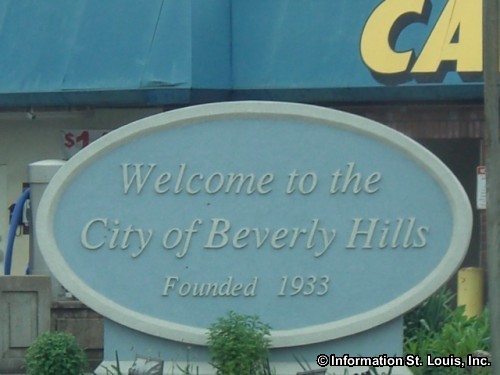
beverly-hills-mo-welcome-sign-63121

A study of policing in the St. Louis area released Monday, which criticized the profit-driven practices of many departments in St. Louis County, revealed a startling statistic about arrests for minor crimes made in one tiny municipality.

Beverly Hills, Missouri, population 574, has taken in over a quarter of its revenue from court fees and fines in recent years, at an annual rate of nearly $400 per resident. Its police department patrols Beverly Hills as well as nearby Velda Village Hills, a combined area totaling less than a quarter of a square mile.

Between 2010 and 2014, Beverly Hills made an average of 1,087 arrests per 1,000 residents for less serious offenses, meaning they arrested more people for such offenses each year than actually lived in the jurisdiction they patrolled, according to the new report from the Police Executive Research Forum. That’s “more than 100 times the national rate of arrests” for such offenses, according to the report.

Read More  This Tiny Town Near St. Louis Is Making Minor-Crime Arrests At 100 Times The National Average.

Posted in News from the Soul Brother | Tagged , , , , , , , , | Leave a comment

The Thin White Line: Most Cops Don’t Look Like the Residents They Serve

By Bryan Schatz and AJ Vicens

In Baltimore, white people make up 28 percent of the population but 50 percent of the city’s police officers. In Philadelphia, where police and protesters clashed last Thursday during a #FreddieGray rally, whites are 37 percent of the population but 58 percent of the police force. In Sacramento, whites comprise just 36 percent of residents but 72 percent of police.

Those are just a few of the departments whose ethnic makeup is dramatically out of sync with the demographics of the cities they serve. Using census data, Chris Zubak-Skees of the Center for Public Integrity crunched the numbers for the nation’s 50 most populous cities. In 49 of them—Atlanta being the lone exception—the cops are whiter than the community.

Zubak-Skees notes that police departments in many cities have worked hard to make themselves more diverse. Acting on recommendations by the 1968 Kerner Commission—which was appointed to investigate the causes of riots in Los Angeles, Chicago, Newark, and Detroit—many departments began reviewing fair promotion policies and recruiting African Americans. The numbers have improved somewhat over the years, but most big-city forces are still far from representative. The Kerner report warned that an “abrasive relationship between police and the minority communities has been a major—and explosive—source of grievance, tension, and disorder.”

“For many, those words still ring depressingly true today,” CPI notes.

Read More The Thin White Line: Most Cops Don’t Look Like the Residents They Serve | Mother Jones.

Posted in News from the Soul Brother | Tagged , , , , , | Leave a comment

Baltimore’s secret history of death: Racism, corporate greed & the most infamous mass-poisoning in American history

By Adam Gaffney

http://www.gettyimages.com/detail/news-photo/police-helicopter-flies-over-homes-as-people-participate-in-news-photo/472012174

Few now doubt the lethality of inequality. Unequal treatment under the law has resulted in case after case of Black lives lost, whether by gunshot, suffocation, or severed spine.

And yet, as tragic as these individual cases are, the lethality of inequality is a problem that goes well beyond the problem of police brutality. More quietly – if no less painfully – lives are being lost every day as a result of entrenched inequities in health that partition Baltimore neighborhoods like yellow police tape.

This is a story that is increasingly being heard. It’s not a new story, nor is it – sadly – a story that is going away any time soon. But, clearly, taking seriously the mantra that “Black lives matter” means understanding, and tackling, the larger problem of health inequality in America.

“Death is a Social Disease”

This story, to some extent, extends back centuries. Indeed, an understanding that there are socioeconomic disparities in death is one of the oldest lessons in the discipline of public health.

In the early 19th century, for instance, the French surgeon Louis René Villermé demonstrated that the level of wealth of a Parisian neighborhood was a primary determinant of the life and death of its residents, a story told by William Coleman in his “Death Is a Social Disease: Public Health and Political Economy in Early Industrial France.” As Villermé concluded from his extensive, groundbreaking statistical investigation, “wealth” and “misery” were (as quoted by Coleman) among the “principal causes … which must be attributed the great differences noted among the mortality rates” from neighborhood to neighborhood in post-revolutionary Paris.

Read More Baltimore’s secret history of death: Racism, corporate greed & the most infamous mass-poisoning in American history – Salon.com.

Posted in News from the Soul Brother | Tagged , , , , , , , , , , | Leave a comment