Baltimore Mayor Asks Feds To Investigate Police Department

By Eyder Peralta

http://www.gettyimages.com/detail/news-photo/mayor-stephanie-rawlings-blake-of-baltimore-speaks-at-a-news-photo/471831456

Baltimore Mayor Stephanie Rawlings-Blake has asked the Justice Department to open up a civil rights investigation into the city’s police department.

“Such an investigation is essential if we are to build on the foundation of reform,” she said during a news conference.

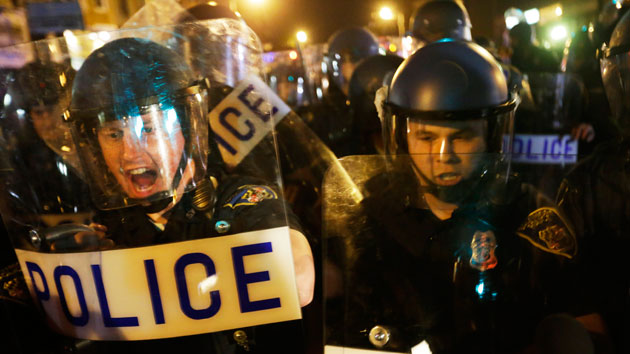
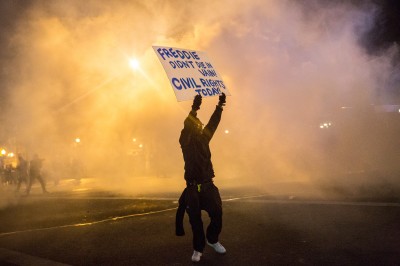
Over the past couple of weeks, Baltimore has seen near-daily protests over the death of Freddie Gray, who suffered a fatal spine injury in police custody. Those protests boiled over into a night of riots.

Rawlings-Blake said that while her administration has worked to reform a troubled police department, “it is clear more needs to be done.”

If the Justice Department decides to comply with Baltimore’s request, the investigation would look at the Baltimore Police Department’s patterns and practices of policing. It would look at whether police in the city have violated the civil rights of its residents.

A similar investigation into the Ferguson, Mo., police force concluded that officers in that city often used discriminatory policing practices against African Americans.

Read More Baltimore Mayor Asks Feds To Investigate Police Department : The Two-Way : NPR.

Posted in News from the Soul Brother | Tagged , , , , , , , , | 1 Comment

Surveillance planes spotted in the sky for days after West Baltimore rioting

By Craig Timberg

Cessna_uc-35a_citation_560_ultra_v_arp

As Benjamin Shayne settled into his back yard to listen to the Orioles game on the radio Saturday night, he noticed a small plane looping low and tight over West Baltimore — almost exactly above where rioting had erupted several days earlier, in the aftermath of the death of a black man, Freddie Gray, in police custody.

The plane appeared to be a small Cessna, but little else was clear. The sun had already set, making traditional visual surveillance difficult. So, perplexed, Shayne tweeted: “Anyone know who has been flying the light plane in circles above the city for the last few nights?”

That was 9:14 p.m. Seven minutes later came a startling reply. One of Shayne’s nearly 600 followers tweeted back a screen shot of the Cessna 182T’s exact flight path and also the registered owner of the plane: NG Research, based in Bristow, Va.

“The Internet,” Shayne, 39, told his wife, “is an amazing thing.”

What Shayne’s online rumination helped unveil was a previously secret, multi-day campaign of overhead surveillance by city and federal authorities during a period of historic political protest and unrest.

Read More  Surveillance planes spotted in the sky for days after West Baltimore rioting – The Washington Post.

Posted in News from the Soul Brother | Tagged , , , , | Leave a comment

Rage, Race and Rebellion: Class Warfare and Frustration in African American Communities

By Stephen Balkaran


Evaluating the series of constant protest throughout the country at times violent, but mostly non-violent has left a deep uncertainty on the role rage, race and rebellion that continue to plague many African American communities. These events continue to voice the frustration of upward economic mobility, social despair, disregard for black lives, police brutality and many other social ills that many African American communities are embedded in.

The recent riots only addressed police brutality but gone from the discussion that should be taking place are the continued economic class warfare that has plagued many of these inner city communities. The access to upward economic mobility in many African American communities is the underlying cause of their frustration that has manifested itself into a race rebellions and riots. The discussion that America must address is how do we increase upward economic mobility in a community that has been denied their rightful piece of the American pie. Gone from the dialogue is the upward economic mobility and its impact on the riots, gone from the dialogue is the continued social oppression that plague these inner cities, gone from the dialogue is why are many African Americans and their communities continue to plague with economic starvation and poverty? These frustrations played an important role in many of the riots in the 1960’s which was often labeled race riots and not class rebellions. The social uprising were part of the economic warfare and disparities that haunted many African American communities, yes race was a factor in the 1960’s but not the main underlying source of the frustration found in many African American communities.

In the 21st century there are still many facets of oppression that exist and are prevalent in many African American communities, silent and not overt racism exists in their school systems, employment, poverty, healthcare, prison system, and other sectors of their societies. Class disparities continue to be an important element that define many black and brown inner cities and compelled with the lack of upward economic mobility opportunities this can be easily use to gauge many African American communities. These economic and class disparities permeates our society in ways we don’t even realize and plays an important role in the frustration that plague many inner city urban communities that African Americans call home. This access to upward economic mobility is more important today than in any other time in our history and will be the key to bridging many of America’s socio-economic and racial dilemmas.

Read More  Rage, Race and Rebellion: Class Warfare and Frustration in African American Communities | Stephen Balkaran.

Posted in News from the Soul Brother | Tagged , , , , , , , | Leave a comment

In Baltimore we need protest in all its forms. Even joyful ones

By Steven W Thrasher

http://www.gettyimages.com/detail/news-photo/people-hold-hands-during-a-rally-lead-by-faith-leaders-in-news-photo/472082216

Spots of joy are necessary and needed in the seemingly endless fight for justice. In Baltimore on Tuesday night, as the city reeled from how the death of Freddie Gray exposed the violence of a decades-long police occupation of the black population, I didn’t experience many moments of sweetness. But one came in the form of a parade of young girls and sashaying boys shortly before nightfall, who made it their business to fill the intersection outside the now infamous burned CVS in West Baltimore with dancing.

The dancers fearlessly responded to the acute violence of the previous night’s events by prancing and voguing. These flamboyant young men and women used energetic dance and music to turn the void of black death into a space filled with black life – their spines were straight in defiance of a broken spine the police had severed.

In Ferguson last summer, there wasn’t much levity in the days after Mike Brown was killed, either. But there was something sweet happening outside the infamous burned down Kwik Trip gas station on West Florissant, where families gathered to take a stand. Children drew with chalk on the ground, sometimes drawing Superman, other times making chalk outlines of their own bodies to articulate their fears they couldn’t express with words. It was tender, touching, even, to see black families responding to the black trauma of white supremacy with black community.

Children draw outlines of their own bodies in chalk.

In New York last December, after the lack of an indictment in the death of Eric Garner, there wasn’t much holiday cheer in the air. It was cold and people were angry, as protesters took to the streets about a lack of justice even in the case of a homicide recorded on video. But there was a lightness to the marching, at times. “The whole damn system is guilty as hell” and other chants were not sung in a cowering position, but with emboldened spirits of people who knew the joy of standing up for themselves.

Read More In Baltimore we need protest in all its forms. Even joyful ones | Steven W Thrasher | Comment is free | The Guardian.

Posted in News from the Soul Brother | Tagged , , , , , , , , , , | Leave a comment

One Disease Hits Mostly People of Color. One Mostly Whites. Which One Gets Billions In Funding?

By Kiera Butler

4087550_f1024February 12, 2009, was supposed to be a big day for Carlton Haywood Jr.: The newly minted Johns Hopkins professor was set to travel from Baltimore to New York City to make a presentation at an important medical meeting. But the night before he left, a searing pain started to surge through his arms and soon spread to his legs. The next morning, when he boarded the train, his whole body felt like it was on fire. By the time he reached Penn Station, he could barely make it to the emergency room.

The pain was caused by Haywood’s sickle-cell disease, a genetic condition in which misshapen red blood cells build up in the blood vessels and cause infections, strokes, and excruciating episodes of pain. Having lived with sickle cell for 39 years and studied it as a bioethicist, Haywood knew the treatment he needed to stop the episode, so he requested a specific combination of medications. The hematologist, however, refused, implying that Haywood didn’t know what he was talking about. Haywood wound up missing the meeting—and was in the hospital for a week.

For the 100,000 Americans with sickle cell—it’s the most common life-shortening genetic disease in the United States—insults like that are routine. “We know what works best for us and what does not work so well for us,” Haywood says. “But doctors often don’t listen.” His research has found that when sickle-cell patients ask for medication—especially opioids to control their pain—they are routinely dismissed as pill seekers, even though they are no more likely to be addicted to painkillers than the general population. Sickle-cell patients in acute pain also face longer ER waits than other patients in acute pain.

So what’s unique about sickle-cell patients? Well, about 90 percent are African American. (The trait is thought to have originated in Africa as an adaptive response to malaria.) Many researchers believe that racial discrimination plays a major role in the care that sickle-cell patients get.

Read More  One Disease Hits Mostly People of Color. One Mostly Whites. Which One Gets Billions In Funding? | Mother Jones.

Posted in News from the Soul Brother | Tagged , , , , , , | Leave a comment

Are We Witnessing the Emergence of A Black Spring?

By Priscilla Ocen & Khaled A. Beydoun

http://www.gettyimages.com/detail/news-photo/detail-view-of-a-mans-shirt-that-reads-black-lives-matter-news-photo/472093764

In the spring of 2010, we witnessed massive protests in the Arab World. The people of Egypt, Tunisia and Libya had enough; they had enough of the violence propagated by the state, of the political and economic marginalization that characterized their existence for generations and they had enough of the unaccountable governmental agencies that inflicted harm with seeming impunity. The protests were driven by social media, the energy of the youth and people who were willing to use their bodies to disrupt the status quo. We were transfixed as images of these protests, dubbed the “Arab Spring,” flooded the airwaves in the United States and across the world.

The description of the Arab Spring could just as easily apply to the mobilizations in the United States, in Ferguson, in New York and now in Baltimore. The similarities between these movements have not escaped the notice of many activists in the United States, as they see the connections between the conditions they confront in poor Black neighborhoods, the eruption of protests in American cities, and the resistance efforts of peoples in the Arab World. For these activists, the protest movements in places like Baltimore signal the rise of a “Black Spring,” a kindred movement spurred by many of the same structural symptoms and subhuman conditions that ignited the popular protests in the Arab World.

Some may suggest that this comparison is unwise or hyperbolic; that the people in the Arab World were protesting autocratic systems that ruled by force rather than by the consent of the governed not the acts of members of law enforcement agencies established in the context of a representative system of government. Certainly, there are important distinctions. Yet the symptomatic and structural similarities between the Arab Spring and the newly dubbed Black Spring are striking. First, disenfranchised youth and young adults are at the forefront. Second, state policing strategy that links specific demographics to crime – or more broadly, security threat – is the target of popular resistance. Third, and perhaps most saliently, both have the archetypes, rallying cries, and social media savvy that not only galvanizes people for immediate action, but also long-term and sustainable movement building.

Read More Are We Witnessing the Emergence of A Black Spring? – News & Views – EBONY.

Posted in News from the Soul Brother | Tagged , , , , , , , , , , , , , | 1 Comment

As Black And Brown People Protest Cop Killings, Whites Don’t See Institutional Racism

By Vanessa Baden Kelly

As Freddie Gray was laid to rest, Americans watched as Baltimore residents protested the death of the 25 year old, whose spinal chord “mysteriously” snapped while in police custody–causing his death. On Friday, six officers were charged with crimes ranging from manslaughter to murder.

As thousands marched in Baltimore’s street, hundreds of thousands more took to news outlets, blogs, and social media to comment on the protests that followed Gray’s death. What many black and brown people saw as reactionary anger to systematic racial injustice, many whites and conservatives saw as a threat to peace and dangerous civil unrest.

One Fox News reporter even suggested that the protests were so barbaric that cops should begin executing people in the street for their roles. Many whites and conservatives have failed to look for the root cause of these and other civil unrests around the country, and have moved to an easier and more comfortable narrative of lawlessness by criminals.

Their failure to ask the question, however, does not make it any less a question. Why have black and brown American’s alike been protesting, engaging in civil unrest, and riots? The answer is simple.

Racism.

Read More As Black And Brown People Protest Cop Killings, Whites Don’t See Institutional Racism | Alternet.

Posted in News from the Soul Brother | Tagged , , , , , , , , | Leave a comment

The enduring shame of ‘separate and unequal’

By Katrina vanden Heuvel

`

In July 1966, James Baldwin published “A Report from Occupied Territory,” a despairing essay in The Nation contemplating race relations in Harlem and other American cities. Describing the deep sense of alienation and despair in the black community, Baldwin wrote, “The children, having seen the spectacular defeat of their fathers — having seen what happens to any bad nigger and, still more, what happens to the good ones — cannot listen to their fathers and certainly will not listen to the society which is responsible for their orphaned condition.” Fifty years later, it’s heartbreaking and infuriating to read those words and realize how little has changed.

The riots that erupted in Baltimore following the death of Freddie Gray, who sustained fatal injuries in police custody last month, were as predictable as they were painful to watch. Across the country, Gray is the latest in a long line of black men killed, inexplicably, in brushes with the law; Baltimore is the latest city, but likely not the last, where blacks’ legitimate frustration has reached a boiling point and spilled into the streets. And yet the unrest in Baltimore and other cities is about more than a single death or even the single issue of police brutality. It’s about the structural racism, inequality and poverty that have pervaded our cities and plagued our society for too long.

Indeed, the profound divisions now on display mirror the findings of the Kerner Commission, which President Lyndon B. Johnson established to study the root causes of the 1967 race riots. “Our nation is moving toward two societies, one black, one white — separate and unequal,” the commission famously warned. “Segregation and poverty have created in the racial ghetto a destructive environment totally unknown to most white Americans,” it reported, adding that the media had “not communicated to the majority of their audience — which is white — a sense of the degradation, misery and hopelessness of life in the ghetto.” That criticism of the media resonates today, as sensational coverage of the destruction and looting too often has disregarded the systemic devastation of the communities in which they are taking place.

Read More The enduring shame of ‘separate and unequal’ – The Washington Post.

Posted in News from the Soul Brother | Tagged , , , , , , , , | Leave a comment

The Curse of Segregation

By Derek Thompson

Baltimore did not need more negative publicity this week. But in a bit of fateful timing, the Equality of Opportunity Project of Harvard University has released two papers concluding that the income mobility for poor children in Baltimore City is worse than in any large county in America. Every year spent in Baltimore “reduces a child’s earnings by 0.7 percent per year, generating a total earnings penalty of approximately 14 percent for children who grow up there from birth,” Raj Chetty and Nathaniel Hendren write.

Geography is not quite destiny. But neighborhoods can dramatically shape the economic prospects of those who grow up there. One hour south on the I-95 of Baltimore is Fairfax, Virginia, one of the 10 best large counties for low-income children. Growing up in Fairfax for 18 years raises a typical low-income child’s household earnings by 11 percent by the time he’s in early adulthood. All else equal, the difference between growing up in Fairfax rather than Baltimore, these studies say, amounts to hundreds of thousands of dollars of lifetime earnings.

The two new studies, beautifully summarized in a portfolio of articles in the The New York Times, arrive at one unmistakable conclusion: Some cities and neighborhoods keep their residents stuck in vicious cycles of poverty while others have a proven track record of turning poorer children into economic success stories. One study looked at low-income families who took vouchers from the government in a randomized 1990s study, which moved thousands of families from housing projects to counties with less poverty. A new analysis of the experiment shows that “every year spent in a better area during childhood increases a child’s earnings in adulthood.”

In other words, the value of moving to a county with high upward mobility is not just a matter of where, but also when: The earlier the move, the better the outcome.

Read More The Curse of Segregation – The Atlantic.

Posted in News from the Soul Brother | Tagged , , , , , , | Leave a comment

A Report from Occupied Territory

By James Baldwin

On April 17, 1964, in Harlem, New York City, a young salesman, father of two, left a customer’s apartment and went into the streets. There was a great commotion in the streets, which, especially since it was a spring day, involved many people, including running, frightened, little boys. They were running from the police. Other people, in windows, left their windows, in terror of the police because the police had their guns out, and were aiming the guns at the roofs. Then the salesman noticed that two of the policemen were beating up a kid: “So I spoke up and asked them, ‘why are you beating him like that?’ Police jump up and start swinging on me. He put the gun on me and said, ‘get over there.’ I said, ‘what for?’ ”

An unwise question. Three of the policemen beat up the salesman in the streets. Then they took the young salesman, whose hands had been handcuffed behind his back, along with four others, much younger than the salesman, who were handcuffed in the same way, to the police station. There: “About thirty-five I’d say came into the room, and started beating, punching us in the jaw, in the stomach, in the chest, beating us with a padded club—spit on us, call us niggers, dogs, animals—they call us dogs and animals when I don’t see why we are the dogs and animals the way they are beating us. Like they beat me they beat the other kids and the elderly fellow. They throw him almost through one of the radiators. I thought he was dead over there.”

“The elderly fellow” was Fecundo Acion, a 47-year-old Puerto Rican seaman, who had also made the mistake of wanting to know why the police were beating up children. An adult eyewitness reports, “Now here come an old man walking out a stoop and asked one cop, ‘say, listen, sir, what’s going on out here?’ The cop turn around and smash him a couple of times in the head.” And one of the youngsters said, “He get that just for a question. No reason at all, just for a question.”

No one had, as yet, been charged with any crime. But the nightmare had not yet really begun. The salesman had been so badly beaten around one eye that it was found necessary to hospitalize him. Perhaps some sense of what it means to live in occupied territory can be suggested by the fact that the police took him to Harlem Hospital themselves—nearly nineteen hours after the beating. For fourteen days, the doctors at Harlem Hospital told him that they could do nothing for his eye, and he was removed to Bellevue Hospital, where for fourteen days, the doctors tried to save the eye. At the end of fourteen days it was clear that the bad eye could not be saved and was endangering the good eye. All that could be done, then, was to take the bad eye out.

Read More A Report from Occupied Territory | The Nation.

Posted in News from the Soul Brother, Soul Brother Presents | Tagged , , , , , , , | 1 Comment