Why 1 of the Jena 6 Is Now Speaking Out Against Juvenile Justice Spending

By Carimah Townes

prison_barsAs a member of the “Jena 6,” Theo Shaw was imprisoned for seven months without adequate legal counsel. Now, Shaw is emerging as a vocal opponent to a proposal to inject another $3.5 million into the juvenile detention system.

In testimony before the Louisiana House Appropriations Committee Tuesday, Shaw argued that an Office of Juvenile Justice (OJJ) proposal to provide millions more in funding as they open a new 72-bed facility, the Acadiana Center for Youth, could provide incentives for OJJ to expand bed capacity in other facilities. Acadiana was built, in part, to give detainees easier access to their family members, so many juveniles housed around Louisiana are planning to transfer to the new facility.The Louisiana Center for Children’s Rights (LCCR) and Shaw hope that other facilities will remove beds — not add more.

Shaw gained national attention in 2007, as one of six black Jena High School students who faced murder charges for beating a white classmate. The incident occurred after white students hung nooses on a tree, the day after a black student sat beneath it. White students typically sat under the tree, and hung the nooses in response to the black student’s decision to break the status quo. Racial tension escalated in subsequent months, culminating in the fight that sparked national outrage. Shaw, who was 17 years old at the time, maintained that he wasn’t involved in the assault, and spent seven months behind bars because his family didn’t have enough money to pay his bail.

Read More  Why 1 of the Jena 6 Is Now Speaking Out Against Juvenile Justice Spending | ThinkProgress.
Posted in News from the Soul Brother | Tagged , , , , | Leave a comment

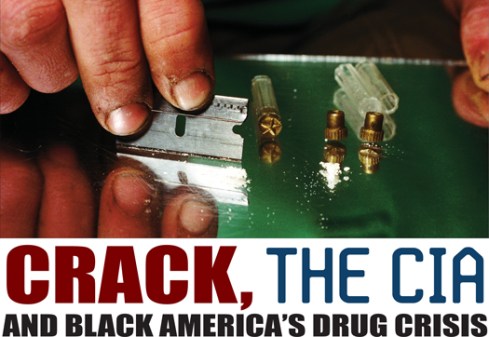
Crack, The CIA And Black America’s Drug Crisis

By Charlene Muhammad

The film “Kill the Messenger” rekindled interest and outrage over CIA ties to drug trafficking and the 1980s crack cocaine epidemic that devastated neighborhoods, destroyed families and led to the imprisonment of thousands from Black communities across America.

The movie highlights the work, honor and the demise of journalist Gary Webb for his investigation into CIA-connected drug peddling, and the movie release Oct. 10 again raised the important question: How is Black America faring in “post-crack” years?

Not too well, according to activists, political scientists, gang interventionists, and legal experts.

“As far as I’m concerned … looking at the research, looking at what I see in front of me in terms of our community, really, it had a greater impact on certain aspects of our community as Black folks, and in terms of rooting at this fabric of the Black community than enslavement did,” said human rights attorney Nana Gyamfi.

Before crack cocaine, Blacks identified themselves as a people tied together, whether they were in Brazil, America, Jamaica, or Haiti, the activist argued. Blacks were clearer on who they were, and who their torturers, tormentors, and rapists were. But today, Blacks are disunited and don’t trust one another in this so-called post-crack era, she said.

“All of us live in these fake little prisons, or many of us do, where we’ve got bars all over our windows. We’re behind gates.  We’ve got barred doors. We’ve got all of this that we didn’t have before that, before people started breaking into people’s houses, trying to get whatever they could so they could get some drugs,” Atty. Gyamfi continued.

Read More Crack, The CIA And Black America’s Drug Crisis.

Posted in News from the Soul Brother | Tagged , , , , , , , , , , | 1 Comment

For U.S. Women, Inequality Takes Many Forms

By Ariel Smilowitz

un_dollar_usThe gender wage gap is a complex problem, and we’ll need to address factors like race and region to solve it.

Although we are only a few months into 2015, it has already proven to be a watershed year for women’s rights around the world. On the heels of the International Women’s Day March for Gender Equality, the He for She and Planet 50-50 by 2030 Campaigns, and the twentieth anniversary of the Beijing Declaration and Platform for Action, international advocates and officials alike are coming together to evaluate the progress that has been made over the past several years. This raises the question: what is the current status of women in the United States?

The Institute for Women’s Policy Research (IWPR)—in partnership with a multitude of organizations including the Ford Foundation, the Roosevelt Institute Campus Network, and the Center for American Progress—just released the 2015 edition of its project on the Status of Women in the States, with newly updated data and trend analyses on women’s economic, social, and political progress in the United States. The findings? Although we have indeed experienced progress toward gender equity, it’s likely that we won’t see equal pay for American women within our lifetime. (For more on this topic, see this post by Roosevelt Fellow Andrea Flynn.)

The road to achieving gender equality in the U.S. is quite clearly checkered with significant potholes.

Read More For U.S. Women, Inequality Takes Many Forms | Next New Deal.

Posted in News from the Soul Brother | Tagged , , , , , , | Leave a comment

Race creeps into debate over stalled nomination for attorney general

By Sari Horwitz

African American and other civil rights leaders infuriated over the stalled confirmation vote on Loretta E. Lynch, the first black woman to be nominated for attorney general, are casting the delay as an issue with racial overtones.

They are urging the Senate to act immediately and end a process that has lasted more than five months.

Activists across the country are three days into a hunger strike over the Senate’s failure to vote on Lynch. African American groups have also protested outside the offices of senators who oppose her leading the Justice Department. And one Democratic senator has compared the holdup to the treatment of civil rights activist Rosa Parks in the segregated South, saying that Lynch has been “asked to sit in the back of the bus when it comes to the Senate calendar.”

“The question we all want answered is: Why is it impossible to have a simple constitutional vote on the floor of the Senate?” said the Rev. Al Sharpton, the president of the National Action Network, which is organizing the hunger strike. “Why is it that the first black female nominee is being treated in such a disrespectful and inexcusable manner?”

Read More Race creeps into debate over stalled nomination for attorney general – The Washington Post.

Posted in News from the Soul Brother | Tagged , , , , , , , | Leave a comment

What We Don’t Mention About Unemployment

ueIn this year’s State of the Union address, President Obama mentioned jobs 19 times, repeating it more than any other word with any policy implications. “Our economy is growing and creating jobs at the fastest pace since 1999,” he said in his opening remarks. Shortly thereafter, Sen. Joni Ernst (R-Iowa) delivered the GOP rebuttal, using the word at nearly twice the rate, in admittedly less rosy terms.

Focusing on jobs in political speeches isn’t news. After all, the unemployment rate tends to dictate the terms of a campaign and the outcome of an election. But while the State of the Union from both party leaders tackled employment with nods to education, technology and globalization, they ignored a lesser-known issue haunting the job prospects of at least 70 million Americans: criminal records.

According to the National Employment Law Project, one out of every four adult Americans has a criminal record, a broad term covering everything from violent crime to arrest without a conviction. But for most employers, the devil isn’t in the details—simply having a criminal record can often be enough to have your resume dismissed by employers, leaving you without options to earn a stable income.

The result is that a significant chunk of working-age adults, particularly communities of color, are barred—by law or stigma—from contributing to the economy.

Read More What We Don’t Mention About Unemployment.

Posted in News from the Soul Brother | Tagged , , , , , | 1 Comment

Deaths Of Unarmed Black Men Revive ‘Anti-Lynching Plays’

By Hansi Lo Wang

An obscure but riveting genre of theater is being revived in New York City.

They’re called “anti-lynching plays.” Most were written during the early 1900s by black playwrights to show how lynchings devastated African-American families.

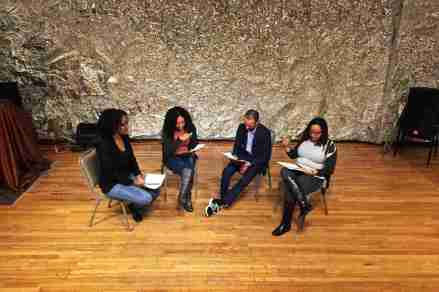
Inspired by the recent deaths of unarmed black men by police, a theater company in Brooklyn, N.Y., is staging a series of new readings of these plays, including Georgia Douglas Johnson’s Blue-Eyed Black Boy.

“It’s not a play where we reenact a lynching. The focus is not the gory details,” says Wi-Moto Nyoka, an actress featured in the readings. “This is a human take on our shared history.”

Lynchings were a common part of Southern life when these one-act plays were written. Magazines for the black community often published them so they could be performed in churches and schools or read aloud in homes, according to Koritha Mitchell, an English literature professor at Ohio State University who wrote about the plays in Living with Lynching.

“These plays were interested in saying, ‘Well, we’re being told every day that we are hunted because we’re a race of criminals, but in fact, the real reason that our neighbor was lynched was because he had land that whites wanted to take,’ ” Mitchell explains.

She adds that white mobs also targeted African-Americans with successful businesses or families.

“Being able to tell the truth about why communities are under siege was a really important counterpoint to a society that’s always telling you that you deserve whatever you get,” Mitchell says.

Read More Deaths Of Unarmed Black Men Revive ‘Anti-Lynching Plays’ : Code Switch : NPR.

Posted in News from the Soul Brother | Tagged , , , | 1 Comment

Shirley Chisholm : My Bid for Presidency

imagesBefore Jessie, Before Barack, Before Hillary, there was Shirley Chisholm (1924-2005). She was the first black woman elected to the United States Congress (NY 12th District, serving 7 terms) and the first African-American to run for the Presidency of the United States in 1972.

Listen to Mrs. Chisholm’s recollections. Know your history!!!

Posted in Soul Brother Presents | Tagged , , , , , , , | Leave a comment

By One Measure, Wages for Most U.S. Workers Peaked in 1972

By Jeffrey Sparshott

By one measure, wages for most U.S. workers peaked more than four decades ago.

Adjusted for inflation, average weekly earnings for production and nonsupervisory employees–the bulk of the workforce–topped out in October 1972, according to the Labor Department. In today’s dollar, that weekly paycheck was the equivalent of about $811, compared with just under $703 a week last month.

Data released Friday showed real average hourly earnings for production and nonsupervisory employees fell a seasonally adjusted 0.1% from February to March, and real average weekly earnings decreased by 0.4%, underscoring soft wage gains during this recovery. From a year earlier, inflation-adjusted hourly and weekly earnings increased by 2.3% percent.

BN-HY153_realwa_G_20150417085212


Read More By One Measure, Wages for Most U.S. Workers Peaked in 1972 – Real Time Economics – WSJ.

Posted in News from the Soul Brother | Tagged , , , , , | Leave a comment

The Orwellian police tactic that targets Black Americans for simply existing

By Jason Williamson

Reuters/Carlo Allegri salon.com

Reuters/Carlo Allegri salon.com

Kirk McConer was arrested and jailed while talking to a friend outside a convenience store, where he had just purchased a soda. Tyrone Hightower was arrested and jailed after sitting in his car in the parking lot of a nightclub, as he waited to make sure his friends were admitted to the club. And Jacob Manyong was stopped and placed under arrest after the back tire of his car barely crossed the property of a private business, as he drove out of an adjacent public lot.

The charges against McConer, Hightower, and Manyong? Trespassing.

Although the charges against each of them were eventually dropped, memories of the experience still linger—so much so that each of them remains fearful that he could be victimized again at any moment.

And they’re scared for good reason. Their respective ordeals were the product of a practice introduced by the Grand Rapids Police Department decades ago, which relies on the use of generalized “No Trespass Letters” to justify arrests for criminal trespassing on commercial property. But more to the point, the policy gives police in Michigan’s second-largest city an excuse to stop and search people immediately based on nothing more than a gut reaction to the way someone looks or acts—without bothering to determine whether the person is actually trespassing.

Here’s how it works: Grand Rapids police officers solicit business owners in select “high-crime” neighborhoods and ask them to sign a No Trespass Letter, stating that they do not want unauthorized people on their property and that they will cooperate with any efforts to prosecute trespassers. The signed letter, valid for one year, is then placed on file with the police department and can be renewed.

Read More The Orwellian police tactic that targets Black Americans for simply existing – Salon.com.

Posted in News from the Soul Brother | Tagged , , , , | Leave a comment

Citizens Stand For Economic Equality With #BlackWorkMatters And The #FightFor15

By Jessica Dickerson

Capture8Police brutality is not the only issue concerning black lives in America.

#BlackLivesMatters is a hashtag that has taken the Internet by storm and symbolizes a movement around the validation and protection of black lives around the globe. However, while the campaign includes the fight against many issues plaguing the African American community, one particular civil rights focus took the main stage on Wednesday: #BlackWorkMatters. In a push for racial justice, protesters took to the streets in cities across the country — from New York City, Chicago, Seattle, Sacramento and New Orleans — to demand a $15 per hour minimum wage and the creation of a union for fast food workers.

Black Youth 100, a non-profit organization focused on racial, social and economic freedom, released a video Monday explaining The Black Work Matters campaign — also known as the Fight For $15 — which calls attention to the disproportionate number of young black people who work in low wage jobs and the experiences they have in these positions.

“It’s a fight for the dignity of workers,” says Charlene A. Carruthers in the video, the National Director BYP100. “It’s a fight for workers to be able to collectively bargain. It’s a fight for workers to actually be in safe environments where their issues and their grievances can be heard.”

The mission of the campaign, which was also a part of Wednesday’s protests, is to empower low wage workers to negotiate fair terms for their employment. Low pay and unsafe work environments plague jobs for parents and families that work in fast food and other low wage industries, according to BYP100 Chicago Chapter co-chair Janae Bonsu. “It’s inhumane,” she says.

Read More Citizens Stand For Economic Equality With #BlackWorkMatters And The #FightFor15.

Posted in News from the Soul Brother | Leave a comment