Uruguay Becomes First Country To Legalize Marijuana

Marijuana small

Marijuana (Photo credit: Wikipedia)

By Nicole Flatow

Uruguay became the first country late Tuesday to legalize the sale, distribution and production of marijuana, in a move aimed at curbing violence from the illicit drug market.

“Today there is a market dominated by drug traffickers. We want the state to dominate it,” bill co-sponsor Julio Bango told the Associated Press.

Now that the Senate and House have passed the measure, individuals in the small country of 3.3 million can access marijuana either by growing their own, joining a licensed cooperative, or obtaining it through a licensed pharmacy. The bill prohibits sales to minors, driving under the influence, and advertising. President Jose Mujica has been a strong proponent of the bill arguing that legal sales will “spoil” the black market by selling it a lot cheaper, although he said he personally hates pot and has never smoked it. Possession of all drugs was already legal in Uruguay.

The ballot initiatives passed in Colorado and Washington envision similar systems, but these laws hang under the cloud of a federal ban on marijuana. Other countries have loosened criminal punishment on drugs in varying ways. In the Netherlands, for example, marijuana is illegal, but the country has implemented a tolerance policy for small-scale possession and sale via licensed “coffee shops,” while cultivation and supply are unprotected. Portugal abolished criminal penalties for possession of all drugs in 2001, and refers those arrested for addiction assessment. Possession has been decriminalized in several other Latin American countries, including Colombia, Argentina, and Ecuador.

Read More Uruguay Becomes First Country To Legalize Marijuana | ThinkProgress.

Posted in News from the Soul Brother | Tagged , , , , , , | Leave a comment

Which cell phone carriers are protecting privacy?

By The Stream Team

what-is-a-smartphoneThe office of Senator Ed Markey (D-Mass.) recently published letters from seven major cell phone carriers that replied to his request for information on how often they received and complied with law enforcement requests for customer data in 2012. The letters confirm what a similar inquiry from Sen. Markey revealed last year: law enforcement requests for customer data are growing in number and are less reliant on court approval.

This year’s replies from cell carriers, however, contain significantly more information about each company’s disparate privacy and storage policies. Pieced together, the letters provide a comparison of how long carriers will store customer information and under what circumstances they will hand over that information to law enforcement.

Privacy advocates have been unable to get precise figures on how often law enforcement agencies demand cell phone data, since the Freedom of Information Act (FOIA) does not apply to private companies. The American Civil Liberties Union (ACLU) has tried to create a snapshot of cell data collection by filing FOIA requests with law enforcement agencies across the country. In order to come up with the figures Sen. Markey obtained using the authority of his office, these organizations would have to file FOIA inquiries with every law enforcement agency in the nation.

Read More Which cell phone carriers are protecting privacy? | Al Jazeera America.

Posted in News from the Soul Brother | Tagged , , , , , , , | Leave a comment

NSA uses Google cookies to pinpoint targets for hacking

By Ashkan Soltani, Andrea Peterson, and Barton Gellman

the lost who dream in binary

(Photo credit: Key Foster)

The National Security Agency is secretly piggybacking on the tools that enable Internet advertisers to track consumers, using “cookies” and location data to pinpoint targets for government hacking and to bolster surveillance.

The agency’s internal presentation slides, provided by former NSA contractor Edward Snowden, show that when companies follow consumers on the Internet to better serve them advertising, the technique opens the door for similar tracking by the government. The slides also suggest that the agency is using these tracking techniques to help identify targets for offensive hacking operations.

For years, privacy advocates have raised concerns about the use of commercial tracking tools to identify and target consumers with advertisements. The online ad industry has said its practices are innocuous and benefit consumers by serving them ads that are more likely to be of interest to them.

The revelation that the NSA is piggybacking on these commercial technologies could shift that debate, handing privacy advocates a new argument for reining in commercial surveillance.

Read More NSA uses Google cookies to pinpoint targets for hacking.

Posted in News from the Soul Brother | Tagged , , , , , , , , , | Leave a comment

With Bratton, de Blasio’s Already Breaking Campaign Promises

By Charles D. Ellison

Bill de Blasio

(Photo credit: Kevdiaphoto)

With all the chatter and excitement surrounding New York City’s black first lady, Chirlane McCray, you’d think it was verboten to talk about anything else when it comes to Mayor-elect Bill de Blasio. To hear the pundit class talk, you wouldn’t think de Blasio was elected—you’d think his wife was.

Which is just fine—if all you’re paying attention to is the strobe lights, bells and whistles that come with such novel political stories.

Sure, it’s a great narrative, reading something like a side script out of faux political thriller Scandal. And speaking as the Gen X child of a black mother and white father, I’m glad to see folks finally coming around to what is really nothing new. Growing up in racially polarized Philadelphia all those years, I watched my parents busily fending off bigoted cops, disapproving glares and the ugly racialism of a society that couldn’t bear to fathom an inevitable social norm. Maybe Dad should have just run for mayor.

But back to politics: That doesn’t exactly resolve the question of what to expect from the next mayor of the largest city in the United States. Remember, anything that goes in a city of nearly 9 million is pretty consequential for the rest of the nation, not to mention New York’s global ramifications as a planetary center of commerce.

And while people of color, particularly African Americans, are currently fixated on the biracial first family of New York City, there’s little attention being paid to what’s certain to be a very dramatic and somewhat volatile transition from 20 years of mostly Republican and/or independent rule in the Big Apple to a Democratic mayor who campaigned—and now might be slipping on—a progressive agenda.

Getting rid of New York City’s infamous stop-and-frisk rule was a top-three campaign priority, a promise that catapulted de Blasio from polling obscurity to a very public political love affair with the city’s blacks and Latinos. But he rushed to hire former New York City police commissioner and stop-and-frisk originator William Bratton as current chief Ray Kelly’s replacement—his first high-profile Cabinet hire.

Read More With Bratton, de Blasio’s Already Breaking Campaign Promises – The Root.

Posted in News from the Soul Brother | Tagged , , , , , | Leave a comment

Mandela wasn’t always revered

English: Young Nelson Mandela. This photo date...

Nelson Mandela. This photo dates from 1937. (Photo credit: Wikipedia)

By Katrina vanden Heuvel

Leaders from across the world will gather in South Africa this week to pay tribute to the most extraordinary leader of our lifetime, Nelson Mandela. The chorus of tributes, from across the globe and across the political spectrum, cannot hope to do justice to this remarkable man, who emerged from 27 years in prison with a grace, dignity and will sufficient to transform the brutal apartheid system peacefully and spread hope across the world.

But Mandela was not always universally praised. In fact, U.S. administrations of both parties were far from ardent opponents of South Africa’s apartheid regime or supporters of Mandela and his organization, the African National Congress (ANC). Conservatives in particular long saw the apartheid regime as an anti-communist bulwark in the Cold War. After Mandela was sentenced to life in prison, the conservative National Review magazine defended South African courts for sending up “a batch of admitted terrorists to life in the penitentiary.” Conservative Russell Kirk opined that democratic rule in South Africa would bring “the collapse of civilization,” and the resulting government would be “domination by witch doctors … and reckless demagogues.”

President Richard Nixon and his secretary of state, Henry Kissinger, believed the apartheid regime was an essential ally that was here to stay, arguing in a secret National Security Council policy study — dubbed the “Tar Baby” report — that the United States shouldn’t risk getting stuck in support of the oppressed majority.

Ronald Reagan branded the ANC a terrorist organization while dismissing apartheid as more of a “tribal policy than a racial policy.” He advocated “constructive engagement” with the regime, calling for closer trade relations while opposing economic sanctions. The emerging new right gleefully joined in labeling the ANC and other African liberation movements communist, while promoting their own “freedom movements,” largely tribal and racialist alternatives. Jack Abramoff, later infamously indicted for illegal lobbying and financial frauds, became president of the International Freedom Foundation, later exposed as a front group for the South African Army, established to discredit the ANC as communists and terrorists. Grover Norquist and others mobilized to counter the divestment movement. (Norquist sported a bumper sticker saying “I’d rather be killing commies.”) In 1990, when Mandela was released from prison and traveled to the United States, the Heritage Foundation called him a terrorist.

Read More Katrina vanden Heuvel: Mandela wasn’t always revered – The Washington Post.

Posted in Soul Brother Presents | Tagged , , , , , | Leave a comment

What I learned from Nelson Mandela

Posted in Soul Brother Presents | Tagged , , , , , , | Leave a comment

The True Cost of a Higher Minimum Wage

By Zachary Karabell

(photo credit: www.wpusa.org)

(photo credit: http://www.wpusa.org)

In his speech at the Center for American Progress this week, President Obama devoted considerable time to an issue suddenly much in discussion: the minimum wage. This is not a new debate. In fact, it neatly echoes the last time Congress raised the minimum wage, in 2007, which echoed the debates before that. Few economic issues are such sweet catnip to ideological camps, and there is precisely zero consensus about whether these minimums have positive, negative or no effect.

Supporters say that a higher minimum wage will give people a better standard of living and boost consumption. Detractors argue that it will lead companies to hire fewer workers and kill job creation. One thing no one addresses, however, is that regardless of whether the government raises the minimum wage, our society can’t endlessly coast with a system that includes wage stagnation for the many and soaring prosperity for the few, nor can the government snap its legislative fingers and magically produce income. Someone will pay for these increases; nothing is free.

You wouldn’t know that from the tenor of the debate. In Obama’s speech, he stated that, “it’s well past the time to raise a minimum wage that in real terms right now is below where it was when Harry Truman was in office.” He acknowledged that many resist the idea of mandating a wage above the current $7.25 an hour. “We all know the arguments that have been used against a higher minimum wage. Some say it actually hurts low-wage workers — businesses will be less likely to hire them. But there’s no solid evidence that a higher minimum wage costs jobs, and research shows it raises incomes for low-wage workers and boosts short-term economic growth.”

It was a robust, populist speech, and it triggered an inevitable retaliation on the right. “Mr. Obama wants to raise the minimum wage to please his union backers,” harrumphed a Wall Street Journal commentator. Jennifer Rubin of the Washington Post decried the idea as just more government wealth transfer, and she countered that rather than raising wages, “One way to lessen income inequality would be to stop transferring wealth from young to old.”

Read More The True Cost of a Higher Minimum Wage – Zachary Karabell – The Atlantic.

Posted in News from the Soul Brother | Tagged , , , , , , , | 1 Comment

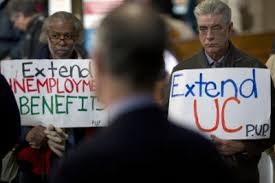
The Final Countdown For Extended Unemployment Benefits

By Arthur Delaney

imagesFor one happy week in January, Casey O’Connell and her husband, Gerry Ferguson, both had jobs.

Ferguson, an Iraq war vet, had been out of work 15 months when he landed employment with Pennsylvania’s workforce development system. For two years, O’Connell had been working in customer service for a heating oil company.

“Great, now we can finally save up and buy a house,” O’Connell, 28, remembered thinking at the moment they became a two-earner family. She said grown up in apartments and relished the opportunity to give her children a traditional home in this Philadelphia suburb.

Then she lost her own job. “You’ve got to be kidding me,” O’Connell said, recalling her disbelief and anger. “This is the worst timing. We were thinking we were going to be able to catch up on all these bills. It sucked.”

Unemployment insurance at least prevented them from falling further behind on the bills, but O’Connell is about to lose the weekly $270 she gets. She’s among the 1.3 million jobless workers set to lose their unemployment insurance Dec. 28 unless Congress acts, and Congress seems reluctant to act. The House of Representatives goes on vacation after this week, the Senate after next.

The benefits were left out of a budget framework crafted by Sen. Patty Murray (D-Wash.) and Rep. Paul Ryan (R-Wis.,) the budget bosses of the Capitol’s two chambers. Despite Democratic demands, Republicans have not signaled willingness to preserve the benefits for another year, which would cost $26 billion.

Read More  The Final Countdown For Extended Unemployment Benefits.

Posted in News from the Soul Brother | Tagged , , , , | Leave a comment

The Awful Service Jobs Replacing Skilled Labor

Contracted food service workers prepare meals ...

(Photo credit: Wikipedia)

By David Atkins

We already knew it anecdotally, of course, but a new MIT studyadds further weight to the notion that outsourcing and mechanization are turning previously well-paying skilled jobs into low-paying service jobs:

The widening chasm in the U.S. job market has brought many workers a long-term shift to low-skill service jobs, according to a study co-authored by an MIT economist.

The research, presented in a paper by MIT economist David Autor, along with economist David Dorn, helps add nuance to the nation’s job picture. While a widening gap between highly trained and less-trained members of the U.S. workforce has previously been noted, the current study shows in more detail how this transformation is happening in stores, restaurants, nursing homes, and other places staffed by service workers. Specifically, workers in many types of middle-rank positions — such as skilled production-line workers and people in clerical or administrative jobs — have had to migrate into jobs as food-service workers, home health-care aides, child-care employees, and security guards, among other things.

Read More The Awful Service Jobs Replacing Skilled Labor | Alternet.

Posted in News from the Soul Brother | Tagged , , , , , , , | Leave a comment

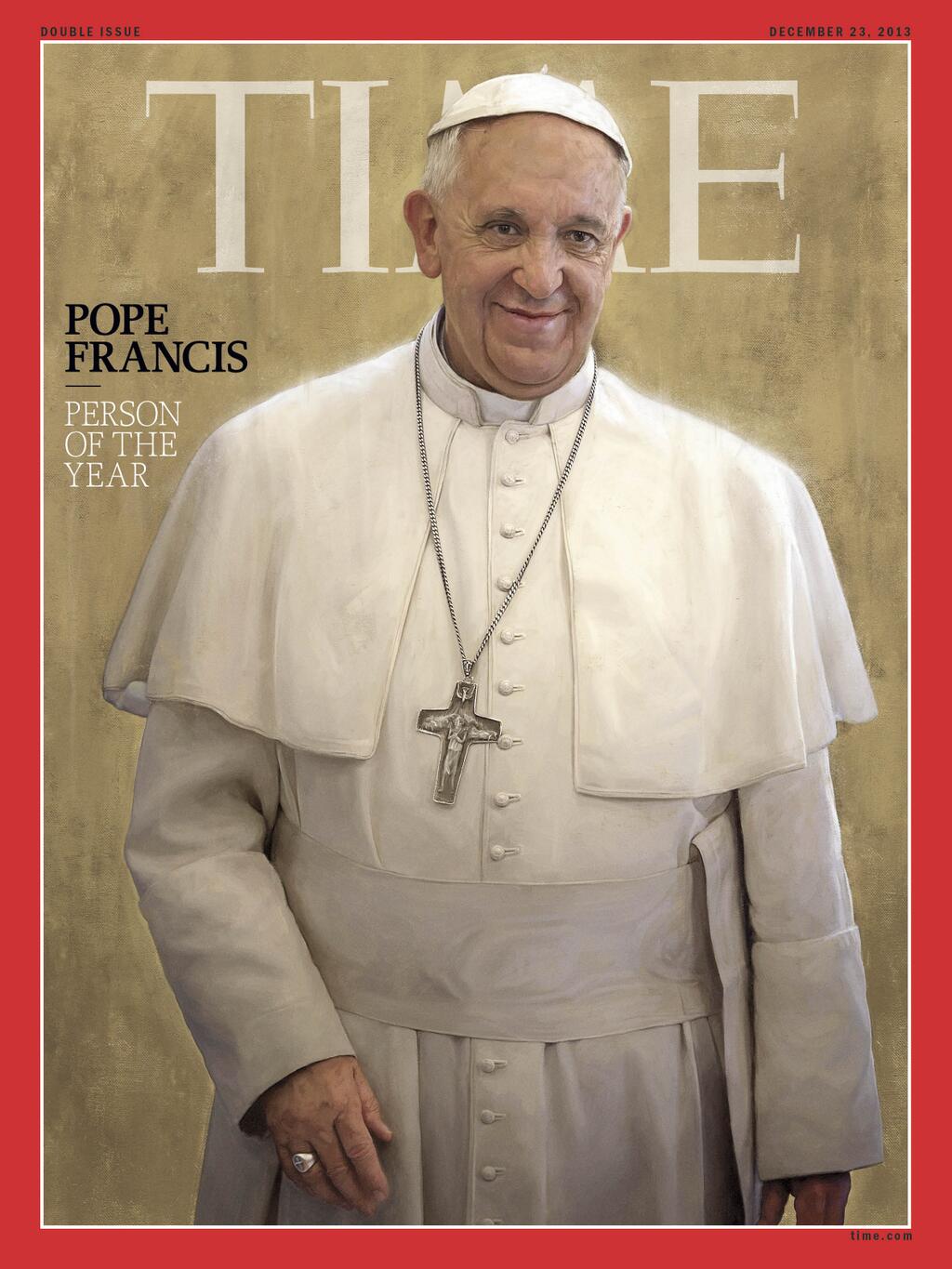
Time’s Person of the Year

BbNIjQYCEAIajLK.jpg large

Posted in Soul Brother Presents | Tagged , , | 3 Comments