
-
Recent Posts
Top Posts & Pages
Categories
George Zimmerman helped rescue family from overturned SUV, cops say

I-4 (FL) (Photo credit: Wikipedia)
By Jeff Weiner
George Zimmerman, the man recently acquitted in the shooting death of 17-year-old Trayvon Martin, helped rescue a family from an overturned SUV last week, the Seminole County Sheriff’s Office confirmed Monday.
According to sheriff’s spokeswoman Heather Smith, deputies were called to the crash about 5:45 p.m. Wednesday. A Ford Explorer — with two children and their parents inside — had gone off the road and rolled over in the area of Interstate 4 and State Road 46, Smith said.
By the time a deputy arrived, Zimmerman and another man “had already helped assist the family by getting them out of the overturned vehicle,” Smith said.
“Zimmerman was not a witness to the crash and left after making contact with the deputy,” Smith said in an emailed statement. “There were no report of injuries to the vehicle occupants.”
The Sheriff’s Office later released a traffic accident report, which identified the parents. Both are white, the report says. Much of their other identifying information was redacted. Zimmerman and the other man are not mentioned in the report.
Read More George Zimmerman helped rescue family from overturned SUV, cops say – OrlandoSentinel.com.
***Something seems fishy here. It’s awfully convenient that GZ was present to play “hero”. I believe the accident happened and tragedy was averted but with a scanner monitoring emergency dispatch channels anyone could be cast in the role. GZ and his team is making a play for positive press, I believe. ~ SB***
Zimmerman verdict: 86 percent of African Americans disapprove
By Jon Cohen
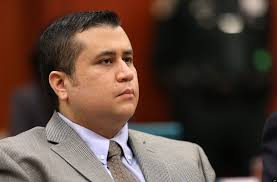 African Americans have a mostly shared and sharply negative reaction to the shooting of Trayvon Martin and the not-guilty verdict in the resulting trial, while whites are far more divided, according to a new Washington Post-ABC News poll.
At least eight in 10 African Americans say the shooting of the Florida teenager was unjustified, recoil at the verdict in the trial and want the shooter, George Zimmerman, tried in federal court for violating Martin’s civil rights.
On the Martin shooting in particular, the racial gaps are extremely wide.
Among African Americans, 87 percent say the shooting was unjustified; among whites, just 33 percent say so. A slim majority of whites (51 percent) approve of the not-guilty verdict in the Zimmerman trial, while African Americans overwhelmingly and strongly disapprove. Some 86 percent of blacks disagree with the verdict — almost all of them disapproving “strongly.”
Read More Zimmerman verdict: 86 percent of African Americans disapprove.
Posted in News from the Soul Brother
Tagged ABC News, african american, Florida, George Zimmerman, Trayvon Martin, United States
1 Comment
Who Will March for Marissa Alexander?

Justice for Marissa Alexander protest in Oakland (Photo credit: Steve Rhodes)
by Marissa Jackson
On the morning after the Morning After, the racial tension in this country could be popped with a needle. If the prevailing narrative is to be believed, Black America is furious, outraged and depressed about George Zimmerman’s acquittal while White America is, through the mouthpiece that is Ann Coulter, screaming “Hallelujah” in jubilant celebration that white supremacy in America has won one more battle.
In reality, the reaction to the verdict has been much more complex, perhaps too complex for news cycles who simply don’t have the time for in-depth reporting and disaggregation if they are to successfully catch the next big story. The massive Bastille Day protests, in the streets of New York City and San Francisco, on blogs, Twitter and Facebook, represent an outrage and dismay that has transcended race, creed, sex, gender, sexual orientation, class and nationality. While post-racial America, it has been proven, is a cruel and violent myth that is perpetuated in order to further disarm racial minorities even in the sphere of discourse, multicultural America is a very real reality.
Much of the outrage may be coming from a sense of disappointment and betrayal that the nearly all-white Southern jury, the victim-shaming and posthumous character assassination of Trayvon Martin, the impunity, the right-wing glee over the death of a black teenager should not be possible in Obama’s America. According to the post-racial script, racism died on November 4, 2008. Every bad thing that happens to black Americans now can be attributed to some internal failing of the black community. Racism is over. Get over it.
Then again, much of the outrage may be coming from a culmination of frustrations and confusions that people of all backgrounds have felt since Barack Obama’s election. It has become painfully clear to them that post-racial America is a lie, that racism has become more potent, more angry, more violent since 2008, justified as defenses of the country’s American values. These frustrations mounted when Trayvon Martin was assassinated and over 40 days passed before George Zimmerman was even arrested.
Read More Who Will March for Marissa Alexander?.
*** Sign the petition to free Marissa Alexander: http://www.change.org/petitions/free-marissa-alexander it’s important to get this young woman freed!!!~ SB***
Man Posts Drake Lyrics & “Kill All Whites” On Facebook, Gets Arrested For “Terroristic Threat”

By John Del Signore
A Far Rockaway man was arrested last week for making a Facebook status update with the hashtag “killallwhites,” which a nervous NYPD interpreted as “making a terroristic threat,” a felony. In the aftermath of the George Zimmerman verdict, Remel Newson’s status update caught the eye of an NYPD officer monitoring Facebook; it read: “BLAC NIGGAS CNT GET NO TYPE OF JUSTICE FUCCIN WIT DESE CRACCER’S #KILLALL WHITES DATS DA TYPE OF SHIT I’M ON FUCK DIS BEEF SHIT LET’S KILL COPS ND NEIGHBO RHOOD WATCHER #FACTS DAT.” Cops were at Newson’s door with hours.
According to investigators, Newson, 20, admitted he made the Facebook post, as well as another Facebook post quoting Drake, which the Queens DA also views as terroristic. (The Drake lyric quoted was “VASSACI VASSACI DESE HATERS IS WATCHIN DEY WISH DEY COULD STOP ME’ DA FLOCCS IN DA LOBBY WE GRIP WITH DA SHOTIE ND WE’LL CATCH A BODY.”)
The criminal complaint says Newson told officers “he fucked up, that he shouldn’t have wrote the above statement on Facebook and that it was a stupid complaint.” But Tasha Lloyd, the Legal Aid attorney representing Newson, tells WNYC his first Facebook post was merely copied and pasted from someone else’s account, and that her client “in no way was trying to intimidate anyone or coerce anyone into doing any illegal act. He just was very upset with the Martin verdict.”
Making a terroristic threat is defined as making a threat “with intent to intimidate or coerce a civilian population, influence the policy of a unit of government by intimidation or coercion, or affect the conduct of a unit of government by murder, assassination or kidnapping, he or she threatened to commit or cause to be committed a specified offense and thereby caused a reasonable expectation or fear of the imminent commission of such offense.”
Sanford police deliver George Zimmerman evidence to FBI office in Orlando

The Seal of the United States Federal Bureau of Investigation. (Photo credit: Wikipedia)
By Arelis R. Hernandez
Sanford police confirmed that within the last hour they had delivered boxes of evidence from their investigation into George Zimmerman to the Federal Bureau of Investigation’s Orlando office.
Capt. Jim McAuliffe said the delivery — which includs the gun used the night Trayvon Martin was fatally shot — was shipped off to the federal agency at their request.
The U.S. Department of Justice opened an investigation shortly after the unarmed black teenager’s shooting death more than a year ago but have not filed any criminal charges.
George Zimmerman, a Neighborhood Watch volunteer, was found not guilty of second-degree murder and manslaughter earlier this month after mortally wounding the Miami Gardens 17-year-old in a Feb. 26, 2012 encounter inside a Sanford gated community.
Sanford police did not immediately arrest Zimmerman after he claimed he shot the teen in self-defense.
Read More Sanford police deliver George Zimmerman evidence to FBI office in Orlando. – OrlandoSentinel.com.
Black Health Rx: Finding A Cure For America’s Health Disparities

Health (Photo credit: 401(K) 2013)
By Jessica Cumberbatch Anderson
For her 40th birthday in October 2011, Khadijah Tribble had one wish: to jump out of an airplane.
“I had been planning the event for four months,” Tribble recalled.
The jump never happened. But it wasn’t because of a last-minute fear of heights or poor weather. It was the excess body weight she was carrying. At more than 300 pounds, she was 70 pounds over the skydiving company’s recommended weight.
For African-American girls who grew up in her hometown of Tuscaloosa, Alabama, being “big-boned,” or “thick,” was something to be desired. Her cousins, who were thinner, “had a tougher time than [she] did as a big girl, because people were always referring to them as ‘stick and bones,’ and telling them they needed to go eat,” she said.
According to 2011 data from the Centers for Disease Control and Prevention (CDC), Tribble’s home state ranks second in the United States (behind Mississippi) in the prevalence of obesity. Thirty-two percent of Alabama’s adult population qualifies as either obese or overweight.
For Tribble, the skydive that never happened was the wake-up call of her life. She had a serious talk with her health care provider. And in December 2012, she decided to undergo gastric bypass surgery. Since then, she has dropped nearly 80 pounds. What’s more, she has become an advocate for healthy living in her predominantly African-American community in Washington, D.C.
Her story is one of the millions that highlights the close calls, cultural norms and tough conversations about health happening across Black America, as one epidemic gives way to another and the community struggles to fight back.
Read More Black Health Rx: Finding A Cure For America’s Health Disparities.
In Climbing Income Ladder, Location Matters
By David Leonhardt
 Stacey Calvin spends almost as much time commuting to her job — on a bus, two trains and another bus — as she does working part-time at a day care center. She knows exactly where to board the train and which stairwells to use at the stations so that she has the best chance of getting to work on time in the morning and making it home to greet her three children after school.
“It’s a science you just have to perfect over time,” said Ms. Calvin, 37.
Her nearly four-hour round-trip stems largely from the economic geography of Atlanta, which is one of America’s most affluent metropolitan areas yet also one of the most physically divided by income. The low-income neighborhoods here often stretch for miles, with rows of houses and low-slung apartments, interrupted by the occasional strip mall, and lacking much in the way of good-paying jobs.
This geography appears to play a major role in making Atlanta one of the metropolitan areas where it is most difficult for lower-income households to rise into the middle class and beyond, according to a new study that other researchers are calling the most detailed portrait yet of income mobility in the United States.
The study — based on millions of anonymous earnings records and being released this week by a team of top academic economists — is the first with enough data to compare upward mobility across metropolitan areas. These comparisons provide some of the most powerful evidence so far about the factors that seem to drive people’s chances of rising beyond the station of their birth, including education, family structure and the economic layout of metropolitan areas.
Read More In Climbing Income Ladder, Location Matters – NYTimes.com.
8 Stark Realities of America’s Dysfunctional New Economy
By Steven Rosenfeld
 There’s a new normal in the American economy for vast slices of society and it’s discouragingly tough, despite all the cheerleading from the White House and economists that the country is in a slow but steady recovery. If anything, the new American economy has undergone a structural shift where far too many jobs are not paying enough to cover basic living expenses and money worries are simmering and never-ending.
“It’s difficult to point fingers at people and say, ‘You screwed up in some way’ or ‘You aren’t working hard enough,’” said Erica Seifert, a senior associate at Greenberg Quinlan Rosner Research, which recently conducted a series of focus groups in Florida and Ohio among young college women, Latino voters and white working-class voters. “This economy isn’t functional. The jobs don’t pay.”
Siefert’s firm convened groups of likely voters to hear detailed remarks about how they and their familes were faring economically. What they found was that previously given explanations for economic hard times, such as saying, “It’s the recession,” were replaced by comments that suggested that America is now beset with “institutional inequality.”
Read More 8 Stark Realities of America’s Dysfunctional New Economy | Alternet.
 soulbrotherspeaks.com
The Privilege of Whiteness
Unlearn Racism 4 (Photo credit: Light Brigading)
By Paul Waldman
As a biracial child who spent part of his youth abroad, Barack Obama learned the feeling of otherness and became attuned to how he was perceived by those around him. As a politician, he knew well that many white people saw him as a vehicle for their hopes of a post-racial society. Even if those hopes were somewhat naïve, they came from a sincere and admirable desire, and he was happy to let those sentiments carry him along. Part of the bargain, though, was that he had to be extremely careful about how he talked about race, and then only on the rarest of occasions. His race had to be a source of hope and pride—for everybody—but not of displeasure, discontent, or worst of all, a grievance that would demand redress. No one knew better than him that everything was fine only as long as we all could feel good about Barack Obama being black.
So when he made his unexpected remarks about Trayvon Martin on Friday, Obama was stepping into some dangerous territory. By talking about his own experience as a black man, he was trying to foster both understanding and empathy, to explain to white Americans why the Martin case has caused so much consternation and pain among black Americans. The petty (and not so petty) daily suspicion and indignities and mistreatment black people are talking about? Even I, the most powerful human being on the planet, know them well.
In doing so—an
In doing so—and by saying “it’s going to be important for all of us to do some soul-searching”—he may have implicitly encouraged white people to think about their own privilege, the privilege of whiteness. Privilege is a dangerous word, one that raises lots of hackles, and one Obama himself would never, ever use. But it’s inescapable.
Despite the way people react when the word is introduced, acknowledging your own privilege doesn’t cost anything. I grew up in a home with lots of books, in a town with good schools, in a country with extraordinary opportunities. I benefited hugely from them all, though I created none of them. I may have earned my current job as a writer, but compared to the labors of those who wait tables or clean houses or do factory work, it’s so absurdly pleasant you can barely call it work at all. But more to the point, in all my years I’ve never been stopped by a cop who just wanted to know who I was and what I was up to. I’ve never been accused of “furtive movements,” the rationale New York City police use for the hundreds of thousands of times every year they question black and Hispanic men. I’ve never been frisked on the street, and nobody has ever responded with fear when I got in an elevator. That’s not because of my inherent personal virtue. It’s because I’m white.
I will never have to sit my children down and give them a lengthy talk about what to do and not to do when they encounter the police. That’s the talk so many black parents make sure to give their children, one filled with detailed instructions about how to not appear threatening, how to diffuse tension, what to do with your hands when you get pulled over, and how to end the encounter without being arrested or beaten. I can tell my children, “Don’t do anything stupid,” and that will probably be enough. I worry about them as much as any parent, but there are some things I don’t have to worry about.
Read More The Privilege of Whiteness.