Documentary Blows Open Serial Killer’s 25-Year Spree of Killing Black Women and a Shocking Lack of Interest in Catching Him

By Kali Holloway

By the mid-1980s, the Los Angeles Police Department knew there was a prolific serial killer operating in the South Central section of the city. His victims, like most of the residents of the area, were overwhelmingly African American and poor. All were women; many worked as prostitutes, often to fund drug addictions. In 1988, when the death toll was nearly 20 bodies deep, a single survivor lived to tell police key information indispensable to any murder investigation: the type of car the killer drove, the block he lived on, identifying features for an eyewitness sketch. A .25 caliber bullet was recovered from the victim’s chest, linking her attack to the murders of at least eight other women from the same area. But police, in a pattern that becomes maddeningly and infuriatingly familiar over the course of Nick Broomfield’s documentary Tales of the Grim Sleeper, chose to do nothing with that information. They failed to undertake even the most basic requirement for ensuring public safety: alerting residents of South Central Los Angeles that a serial murderer was killing, and very likely living, amongst them.

Broomfield’s documentary is filled with revelations such as these, insights that demonstrate how Los Angeles police’s indifference to—and barely concealed contempt for—its poorest, most marginalized citizens allowed Grim Sleeper killer suspect Lonnie Davis Jr. to murder dozens of African-American women over 25 years. Nana Gyamfi, a lawyer involved with the Black Coalition Fighting Back Serial Murders, a grassroots South Central organization that sprang up in the ‘80s in the absence of political will to find the killer, compared the LAPD’s withholding of key evidence from the public to “allow[ing] black women to walk around…where someone is hunting them, not knowing they’re being hunted.” Pam Brooks, a former prostitute who, by default, becomes a key investigator in Broomfield’s fact-finding mission, speaks even more bluntly about how the case demonstrates the devaluation of poor black women’s lives. “The police don’t care because these are black women…I’m a black woman. Who gives a fuck about me?”

Tales of the Grim Sleeper is ostensibly a story about alleged serial killer Franklin, but at its heart, Broomfield’s latest effort is a damning indictment of a criminal justice system that rarely recognizes black lives matter. Lonnie Franklin Jr. was finally arrested on July 7, 2010, more than a quarter of a century after the killings began. He is charged with 10 counts of murder and one attempted murder, though the actual number of victims is suspected to run as high as 100. Franklin’s trial, at long last, is set to begin this summer.

Read More Documentary Blows Open Serial Killer’s 25-Year Spree of Killing Black Women and a Shocking Lack of Interest in Catching Him | Alternet.

Posted in News from the Soul Brother | Tagged , , , , , , , , , , , | 1 Comment

Gary Haugen: The hidden reason for poverty the world needs to address now

Posted in Soul Brother Presents | Tagged , , , , | 1 Comment

The Man Who Broke the Music Business

By Stephen Witt

One Saturday in 1994, Bennie Lydell Glover, a temporary employee at the PolyGram compact-disk manufacturing plant in Kings Mountain, North Carolina, went to a party at the house of a co-worker. He was angling for a permanent position, and the party was a chance to network with his managers. Late in the evening, the host put on music to get people dancing. Glover, a fixture at clubs in Charlotte, an hour away, had never heard any of the songs before, even though many of them were by artists whose work he enjoyed.

Later, Glover realized that the host had been d.j.’ing with music that had been smuggled out of the plant. He was surprised. Plant policy required all permanent employees to sign a “No Theft Tolerated” agreement. He knew that the plant managers were concerned about leaking, and he’d heard of employees being arrested for embezzling inventory. But at the party, even in front of the supervisors, it seemed clear that the disks had been getting out. In time, Glover became aware of a far-reaching underground trade in pre-release disks. “We’d run them in the plant in the week, and they’d have them in the flea markets on the weekend,” he said. “It was a real leaky plant.”

The factory sat on a hundred acres of woodland and had more than three hundred thousand square feet of floor space. It ran shifts around the clock, every day of the year. New albums were released in record stores on Tuesdays, but they needed to be pressed, packaged, and shrink-wrapped weeks in advance. On a busy day, the plant produced a quarter of a million CDs. Its lineage was distinguished: PolyGram was a division of the Dutch consumer-electronics giant Philips, the co-inventor of the CD.

via The Man Who Broke the Music Business – The New Yorker.

Posted in News from the Soul Brother | Tagged , , , , , | Leave a comment

Breaking Ad: When Hip-Hop First Went Corporate

By Kyle Coward

featured-image-hip-hop

First up is the Wu-Tang Clan’s Method Man rapping over a minor-key piano sample atop a classic East Coast boom-bap beat, climaxing with a roar and proclaiming that he likes to wet his whistle with a 40-ounce. The camera pans past Ol’ Dirty Bastard with a lady on his lap, and the mic is thrown to Raekwon, who’s gallivanting on a rooftop and dropping mid-tempo paeans about the art of imbibing. The scene, interspersed with shots of a large beer bottle exploding and re-forming, then switches to Ghostface Killah in front of a bodega, frenetically waxing poetic about the pleasures of liquid yeast.

But this alcoholic ode wasn’t a video for a track off from a Wu-Tang Clan solo album. This 30-second 1994 commercial was part of a campaign for St. Ides, a low-cost, previously obscure brand of malt liquor, that was the first to weave a hip-hop aesthetic into its central messaging.

Today—when Dr. Dre is an Apple executive, Jay-Z has partnered with Samsung on an album release, and Snoop Dogg has appeared in Chrysler commercials—the St. Ides campaign appears strange, a relic from a time when hip-hop culture hadn’t yet earned wider Madison Avenue respect.

“Back then, part of the excitement within the hip-hop subculture, as it still was at that time, was the dawning realization of the potential for hip-hop marketization,” says Eithne Quinn, a senior lecturer in American Studies at the University of Manchester, in the United Kingdom. “Many artists, from poor backgrounds as they often were, didn’t see this as selling out.”

Read More Breaking Ad: When Hip-Hop First Went Corporate — The Atlantic.

Posted in News from the Soul Brother | Tagged , , , , , | Leave a comment

9 Things Many Americans Just Don’t Grasp (Compared to the Rest of the World)

By Alex Henderson

To hear the far-right ideologues of Fox News and AM talk radio tell it, life in Europe is hell on Earth. Taxes are high, sexual promiscuity prevails, universal healthcare doesn’t work, and millions of people don’t even speak English as their primary language! Those who run around screaming about “American exceptionalism” often condemn countries like France, Norway and Switzerland to justify their jingoism. Sadly, the U.S.’ economic deterioration means that many Americans simply cannot afford a trip abroad to see how those countries function for themselves. And often, lack of foreign travel means accepting clichés about the rest of the world over the reality. And that lack of worldliness clouds many Americans’ views on everything from economics to sex to religion.

Here are nine things Americans can learn from the rest of the world.

1. Universal Healthcare Is Great for Free Enterprise and Great for Small Businesses

The modern-day Republican Party would have us believe that those who promote universal healthcare are anti-free enterprise or hostile to small businesses. But truth be told, universal healthcare is great for entrepreneurs, small businesses and the self-employed in France, Germany and other developed countries where healthcare is considered a right. The U.S.’ troubled healthcare system has a long history of punishing entrepreneurs with sky-high premiums when they start their own businesses. Prior to the Affordable Care Act of 2010, a.k.a. Obamacare, many small business owners couldn’t even obtain individual health insurance plans if they had a preexisting condition such as heart disease or diabetes—and even with the ACA’s reforms, the high cost of health insurance is still daunting to small business owners. But many Americans fail to realize that healthcare reform is not only a humanitarian issue, it is also vitally important to small businesses and the self-employed.

Read More 9 Things Many Americans Just Don’t Grasp (Compared to the Rest of the World) | Alternet.

Posted in News from the Soul Brother | Tagged , , , , , , | Leave a comment

NYC Has 118,000 Missing Black Men

By Christopher Robbins

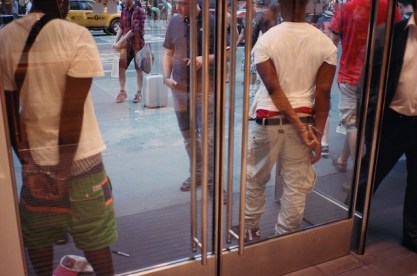
A new report shows that more than one of every six black men in the United States who should be between the ages of 25 and 54 have “disappeared” from free society, mostly due to incarceration or death. Nowhere is this number greater than in New York City, where there are 118,000 fewer black men than there should be.

Nationwide, there are only 83 black men for every 100 black women.

“The numbers are staggering,” Becky Pettit, a professor of sociology at UT-Austin told the Times.

Black males die at higher rates from heart disease or accidents than white men (or black women), but the number one cause for death among black males ages 15 to 34 is homicide.

Violent crime has gone down drastically since the late ’80s and early ’90s, but the United States has the highest incarceration rate in the world—African Americans make up almost 1 million of the 2.3 million people currently imprisoned (though in recent years New York has lowered its prison population by 26%).

Young black men are 11 times more likely to be shot by the police than their white counterparts.

Ferguson, Missouri is the U.S. city with a population above 10,000 with the largest proportion of black men missing.

Read More NYC Has 118,000 Missing Black Men: Gothamist.

Posted in News from the Soul Brother | Tagged , , , , , , , | 2 Comments

Michigan man denies racism after hanging nooses and Confederate flags outside properties

By David McCormack

A businessman in suburban Detroit is under fire from unhappy neighbours after hanging a Confederate flag and nooses at his two properties in the area.

Robert Tomanovich, who owns Robert’s Discount Tree Service in Livonia, Michigan, first hung a noose from a tree and a Confederate flag, printed with the slogan ‘I ain’t coming down,’ on a fence at his home.

When neighbours complained, a second noose appeared on a tree outside his tree-cutting business which operates at a second property on the same street.

Tomanovich, 55, has denied his actions are racist, although an employee has admitted that the second noose was a deliberate move to antagonise locals.

‘One hundred fifty years after Abraham Lincoln’s death, we are still going through this kind of atrocities. A hangman’s noose and a Confederate flag?’ neighbor Mary Greer told WXYZ.

Another local complained that at least one of the nooses was hung from a tree small enough for a young child to climb.

When the local TV network attempted to speak to Tomanovich on Friday he refused, although his wife Lindy tried to explain the noose as a tribute to a dead friend.

‘Robert has a friend that died in that way (hanging himself), and that’s in memory of his friend,’ she told WXYZ. ‘There’s no crime in hanging a noose.’

An unnamed employee was quick to take credit for the noose at Tomanovich’s business. ‘Screw ’em… We’re gonna put more up,’ he said.

Read More Michigan man denies racism after hanging nooses and Confederate flags outside properties | Daily Mail Online.

Posted in News from the Soul Brother | Tagged , , , , , , | Leave a comment

A Foreclosure Conveyor Belt The Continuing Depopulation of Detroit

By Laura Gottesdiener

Unlike so many industrial innovations, the revolving door was not developed in Detroit. It took its first spin in Philadelphia in 1888, the brainchild of Theophilus Van Kannel, the soon-to-be founder of the Van Kannel Revolving Door Company. Its purpose was twofold: to better insulate buildings from the cold and to allow greater numbers of people easier entry at any given time.

On March 31st at the Wayne Country Treasurer’s Office, that Victorian-era invention was accomplishing neither objective. Then again, no door in the history of architecture — rotating or otherwise — could have accommodated the latest perversity Detroit officials were inflicting on city residents: the potential eviction of tens of thousands, possibly as many as 100,000 people, all at precisely the same time.

Little wonder that it seemed as if everyone was getting stuck in the rotating doors of that Wayne County office building on the last day residents could pay their past-due property taxes or enter a payment plan to do so. Those who didn’t, the city warned, would lose their homes to tax foreclosure, the process by which a local government repossesses a house because of unpaid property taxes.

“Oh, my lord,” exclaimed one bundled-up woman when she first spotted the river of people, their documents in envelopes and folders of every sort, pouring out of cars, hunched over walkers, driving electric scooters, being pushed in wheelchairs, or simply attempting to jam their way on foot into the building. The afternoon was gray and unseasonably cold. The following day, in the middle of a snowless meadow in the Sierra Nevada Mountains, the governor of California would announce the state’s first-ever water restrictions as a result of an unprecedented, climate-change-influenced drought. Here in Michigan, city residents were facing another type of man-made disaster: possibly the largest single tax foreclosure in American history.

Read More Tomgram: Laura Gottesdiener, Another Round of Detroit Refugees? | TomDispatch.

Posted in News from the Soul Brother | Tagged , , , , , , | Leave a comment

The Liberty to Feed the Poor

Conor Friedersdorf

080604_Americans_hungry

On the night she was ticketed, Chef Joan Cheever’s menu included fresh vegetable soup, lamb meatballs over wheat pasta, braised Southern greens, and a salad with roasted beets. She plans to appear in a San Antonio court to contest the $2,000 citation. Her offense: serving food to a line of grateful homeless people.

She’s been donating similar meals every Tuesday for a decade. But neither the commercial kitchen where she prepares her food nor the licensed food handlers who serve it nor a food truck that meets all health codes nor her status as a local celebrity excused her apparent failure to obtain a special permit for giving away food free of charge. “Do Good Samaritans get tickets in San Antonio?” she asked the police officer who wrote her up, as she recalls the exchange. “Yes,” he replied.

What makes the encounter a matter of national rather than local concern is the fact that it is not an anomaly. All over the United States, local governments are coercing individuals and organizations to stop helping their least-well-off neighbors. The National Coalition for the Homeless reported last year that at least 31 cities had restricted or banned food-sharing. The Washington Post offers examples: “Late last year, police in Fort Lauderdale busted a 90-year-old World War II veteran named Arnold Abbott twice in one week for feeding the homeless. In Raleigh, N.C., a church group said the cops threatened to arrest them if they served food to the homeless. And in Daytona Beach, Fla., authorities unsuccessfully levied $2000 in fines against six people for feeding the homeless at a park.”

Baylen Linnekin of the Keep Food Legal Foundation has inveighed against attempts to ban food-sharing in Orlando, Philadelphia, Chicago, Seattle, and Birmingham.

Although I find actual laws sanctioning this behavior as morally outrageous as anyone, I also understand the impulse for them in some jurisdictions. As a resident of a neighborhood with a lot of homeless people—Venice Beach, California—I can report that living near where the homeless are served can be trying. The bulk of people I’ve encountered living on the street are sympathetic and unfairly maligned. Many have been failed by society, among them veterans who aren’t getting the medical attention to which they are entitled, mentally ill people who ought to have a bed and caregivers on hand, and folks who’d love a job but can’t get one. But the presence of homeless people also means, at least in my neighborhood, the discovery of human waste in your back alley several times a month, petty drug dealers who scare parents with young kids away from the local playground, meth addicts who aggressively yell obscenities at women on the street, and people off their meds shouting violent threats or bigoted slurs at 3 a.m. I could move, of course. But I wouldn’t condemn the resident of a hypothetical neighborhood from trying to force a food-sharing operation elsewhere if they couldn’t move, felt their kids were threatened by a nightly or weekly influx of homeless people, and felt that they had no other option to protect them.

Read More Feeding the Homeless — The Atlantic.

Posted in News from the Soul Brother | Tagged , , , , , , | Leave a comment

A Teen Dies After Police Encounter on NYC Subway

By Aaron Miguel Cantu

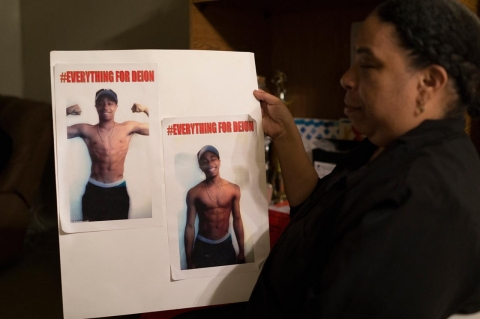
One evening almost two years ago, a young couple walked hand in hand to a subway station in the Brownsville section of Brooklyn. The girl, Hesha Sanchez, 17, wasn’t carrying her fare card, but she wanted to keep her boyfriend, Deion Fludd, company while he waited for the train. So they squeezed through the turnstile on a single swipe of his card.

Roughly 40 minutes later, Fludd, bloodied and semiconscious, was carried from the station. According to the New York City Police Department, officers tried to arrest Fludd for fare evasion after encountering him on the subway platform. He then fled onto the tracks and was hit by a train. But when Fludd awoke the next day, his ankle shackled to his hospital bed, he told a different story: According to his family, the teenager said he’d been injured by police, who’d beaten him after he climbed back onto the subway platform. Nine weeks later, Fludd died from complications from his injuries.

Newly released reports obtained by Al Jazeera America — including one resulting from a New York Police Department’s Internal Affairs Bureau, or IAB, investigation and one from the New York City Transit Authority, or NYCTA — tell a tale of desperation. Police, traveling outside their designated areas of patrol, were committed to making arrests that night in order to avoid additional checkpoint duties. Fludd had already been arrested five times for infractions many teenagers commit without major consequences, including marijuana possession, fare evasion and fighting in school. One more arrest could have sent him to jail — and Fludd happened to be at the wrong place at the wrong time.

The police did not respond to requests for comment on Fludd’s version of events. Before he died, neither the IAB nor the New York Police Department spoke with Fludd, nor have they investigated his claims. What happened that night remains contested by Fludd’s family, who are suing the city and asking the Brooklyn district attorney’s office to investigate.

via A Teen Dies After Police Encounter on NYC Subway | Al Jazeera America.

Posted in News from the Soul Brother | Tagged , , , , , | Leave a comment