
By Nelson Lim & Greg Ridgeway
Jeff Roberson/AP
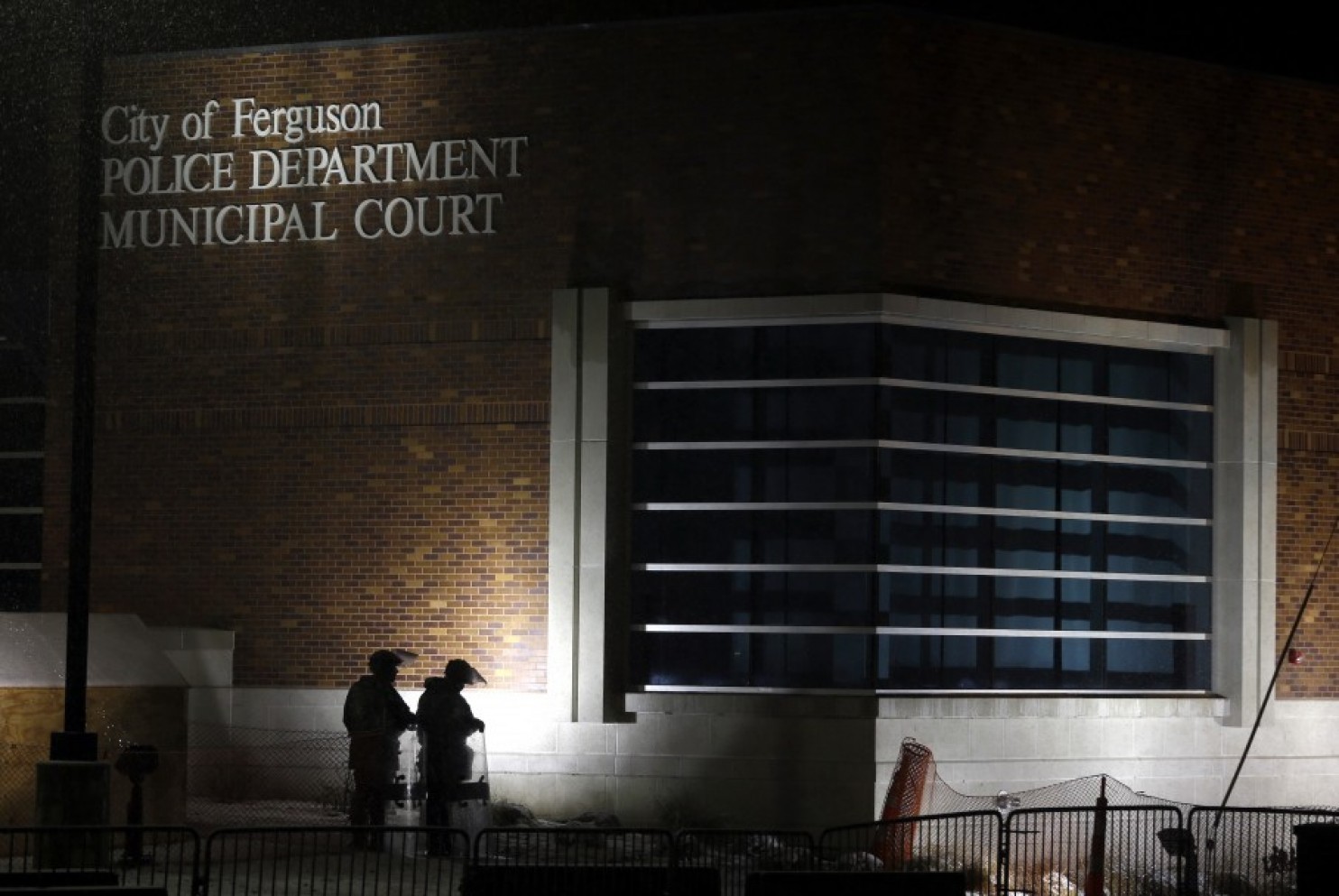
Two reports released by the U.S. Justice Department last week have thrust police-community relations back to the center of the national discourse. One clears former police officer Darren Wilson (PDF) in the shooting death of Michael Brown, an unarmed black teenager. Another strongly criticizes the Ferguson Police Department (PDF), Wilson’s former employer, for a widespread pattern of racial bias, manifesting in traffic stops, fines for petty offenses, and use of force.
But while the DOJ’s investigation of Wilson and criticism of the Ferguson PD have been grabbing headlines, a third federal report released last week may end up being more relevant to addressing America’s policing dilemma.
An interim report (PDF) by President Obama’s Task Force on 21st Century Policing outlines nearly 60 recommendations for improving policing practices and fostering strong relationships between police and the communities they swear to protect and serve.
The report recommends using body cameras and other technologies to enhance oversight and accountability. More importantly, it repeatedly emphasizes collecting and sharing data on police policies and practices to improve transparency, establish legitimacy, and build public trust.
These are sound recommendations, consistent with the emerging consensus among experts. But only sustained, rigorous implementation of these ideas will produce the desired changes. Three sets of the task force’s recommendations help illustrate this.
First, law enforcement agencies should collect and report data as the task force recommends. But without proper analysis, data can mislead the public, inflame emotion, and further deteriorate relationships between police and communities.
Read More Progress After Ferguson? Good Ideas Need Good Implementation | RAND.





 soulbrotherspeaks.com
Selfies allow black women to say we are here, and we are beautiful
By Syreeta McFadden
Our societies celebrate a singular definition of beauty to the exclusion of others. I think of this when I see stray posts of young women of color – black girls, dark skin girls – sharing their carefree moments, perfect and imperfect. Resolution with dark skin in dark light still is a challenge for smartphone cameras, yet I adore how adaptive and inventive we are with that limitation.
We fiddle with Instagram filters, use other photo apps to adjust light curves values that render us magical, mysterious – the center in our own stories – with beauty, drama, and complexity. These photo apps are teaching us to see ourselves anew and across multiple situations. While the mainstream may not yet reflect a wide, true and constructed representation of people of color, we’re creating space for that existence in the cyber world. We’re cultivating a vernacular to understand our images beyond stilted paradigms.
I’d imagine that’s what over a billion posts under the hashtag “selfie” on Instagram show. There’s community in this generation selfies. In the last four years, we’ve witnessed an explosion of shareable images chronicling our highs, lows and sillies alone or standing with others. We’ve seen how communal selfies can be. It’s a misnomer to describe this act with the prefix self – the group self portrait is about so much more than just the individual.
Read More Selfies allow black women to say we are here, and we are beautiful | Syreeta McFadden | Comment is free | The Guardian.